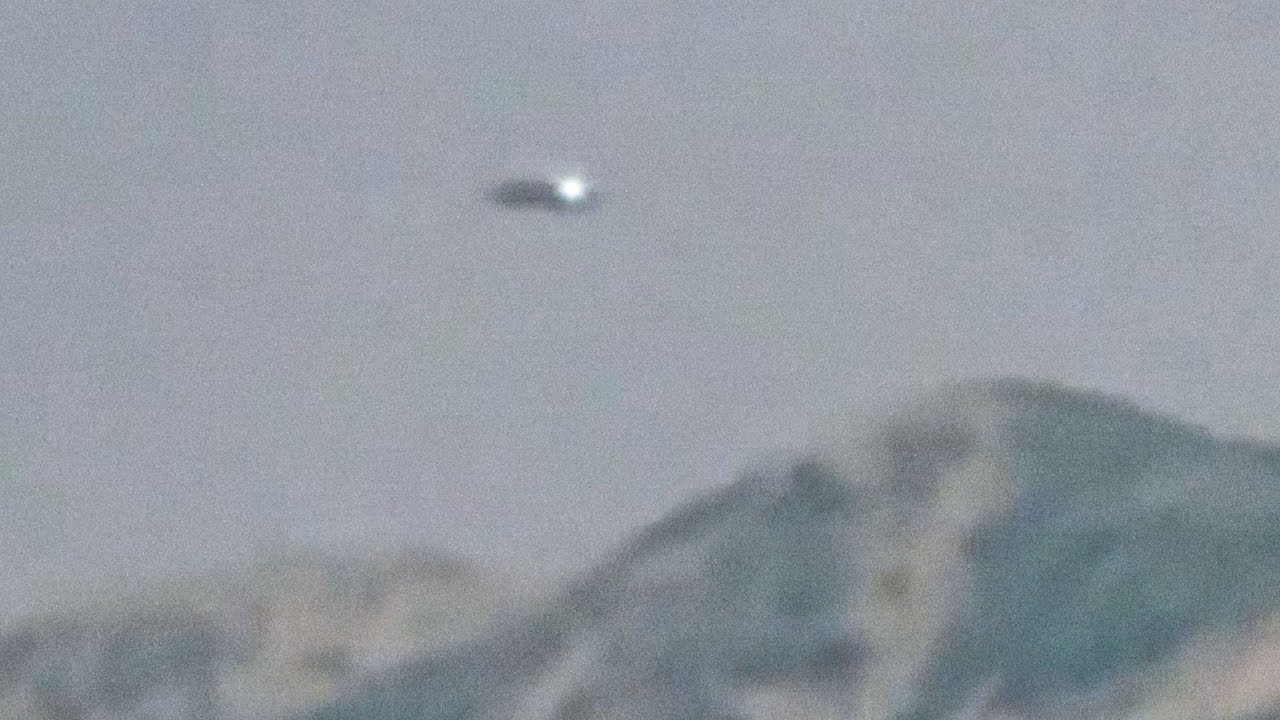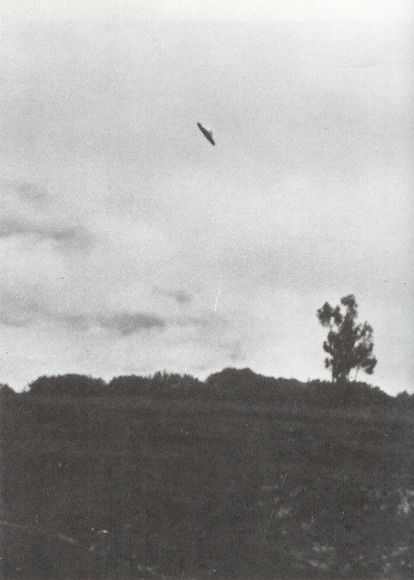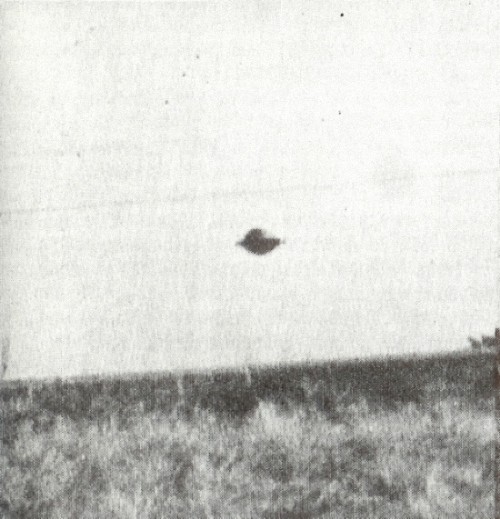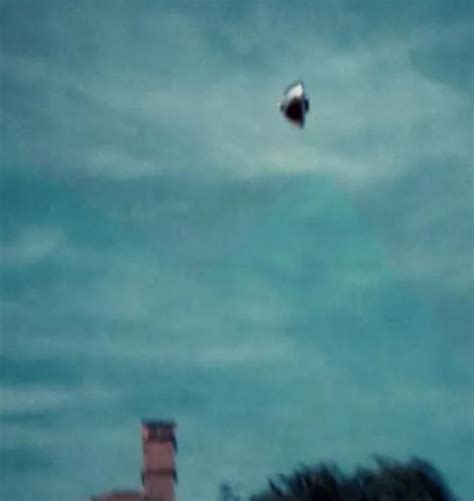
On April 19, 1978, Police Officer Mark Coltrane was on routine patrol in the vicinity of Colfax, a small town in western Wisconsin with a population of approximately 1,000. At midday, Coltrane pulled his vehicle into a secluded area to take a meal break. As he sat in the car, he noticed his police radio was emitting strange crackling sounds — a phenomenon he had not previously encountered. Moments later, he observed a metallic-looking disc ascending into the sky at a short distance from his parked vehicle.
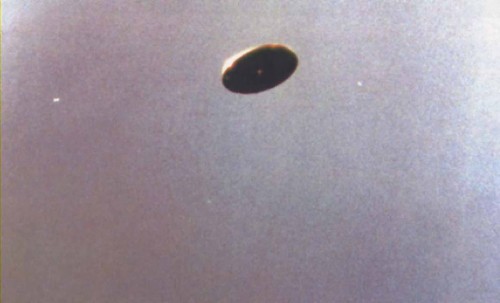
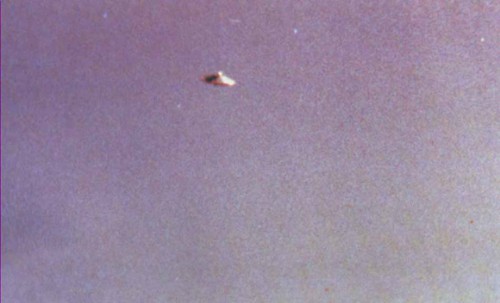
As the object appeared to move toward him rather than away, Coltrane grabbed his Polaroid camera, exited the vehicle, and began photographing the craft. In one of the photographs, the object was so close to the camera that details of its lower surface became clearly visible in the image. In the second photograph, the object is shown in the act of beginning to move away. The entire encounter lasted only a few minutes before the object rapidly accelerated and disappeared into the distance.
He then noticed a metallic-looking disc raising towards the sky at a short distance from the parking space. While the object seemed to move towards him, Coltrane picked up his Polaroid camera, came out of the car and snapped some photographs. The object was so close in one of the images that it is possible to notice some details of its lower surface.
— ThinkAboutIt / Wendelle Stevens (credit: UFOs at Close Sight)Shocked by what he had witnessed, Mark Coltrane remained in a state of amazement for two hours afterward, initially saying nothing to anyone. His silence was motivated by fear of potential ridicule from his superiors when he would eventually have to submit his incident report. The reluctance of a law enforcement officer to report a UFO sighting — despite the documentation of the event with photographs — is itself notable in a field where civilian witnesses often face similar skepticism.
The two Polaroid photographs taken by Officer Coltrane represent a significant piece of evidence in the 1970s American UFO photograph record. The images are notable for several reasons that distinguish them from more ambiguous photographic cases.
The first photograph was taken at sufficiently close range that details of the object's lower surface are visible in the image. This is a significant analytical advantage over distant photographs, where the object's morphology can only be partially inferred. At close range, the geometric configuration of the object's base — including any structural features, openings, or propulsion elements — would be subject to direct visual documentation. The fact that Coltrane was able to capture this level of detail with a Polaroid camera, spontaneously, under field conditions, is a meaningful element of the case's evidential weight.
The crackling radio interference reported by Coltrane prior to and during the sighting is consistent with a pattern observed in numerous close-range UFO encounters — particularly those involving law enforcement witnesses who are trained to observe and report anomalous phenomena and environmental inconsistencies. The electromagnetic interference pattern (radio disruption preceding and coinciding with a UFO sighting) is one of the most consistently reported characteristics of close-range encounters and has been documented across hundreds of cases in the Hynek and APRO archives.
Dr. J. Allen Hynek classified this case as a DD — Daylight Disc. This designation applies to daytime sightings of disc-shaped objects observed at close to moderate range, where the object's morphology is sufficiently visible to permit structural description. The DD category is considered among the most analytically significant in Hynek's classification system because daytime observations of structured objects at close range provide substantially more morphological data than nighttime lights or distant sightings.
The Colfax, Wisconsin encounter represents one of the more analytically significant police-witnessed UFO sightings of the 1970s. A law enforcement officer on routine patrol, with no apparent motive for fabricating a UFO report, documented a close-range metallic disc with Polaroid photographs under spontaneous field conditions. The two-image sequence — showing the object at very close range with visible lower-surface details, and then beginning to move away — constitutes a structured photographic record that significantly exceeds the evidentiary quality of single distant photographs or ambiguous images.
The electromagnetic interference with the police radio adds an independent corroborating element beyond the visual and photographic evidence. The crackling radio reported by Coltrane is consistent with the EM effect pattern documented across hundreds of close-range UFO encounters, and its occurrence prior to the visual sighting suggests the object's approach was accompanied by a physical field effect that extended beyond the immediate visual encounter.
The principal limitation of the case is the absence of publicly documented independent investigation or authentication of the Polaroid originals. Whether the original Polaroid prints or negatives have been subjected to photogrammetric analysis, hoax examination, or elemental analysis has not been established in the available literature. Without access to the original photographs for modern digital analysis, the full analytical potential of the Coltrane images remains unrealized.
- Q.01Could the original Polaroid prints or negatives from Officer Coltrane's camera be located and subjected to modern digital photogrammetric analysis? High-resolution scanning of the original film stock could provide estimates of the object's distance, angular size, and structural characteristics that were not available at the time of the original documentation. Analysis of the original Polaroid chemistry and paper could also provide additional authentication data.
- Q.02What was the specific mechanism producing the electromagnetic interference with Coltrane's police radio? Was the radio disruption localized to his vehicle or was it experienced by other officers in the area? The spatial extent and specific nature of the EM effect — whether it was broadband, intermittent, or correlated with the object's distance — would provide important data on the object's physical properties and the mechanism of its interaction with the environment.
- Q.03What determined the specific April 19, 1978 date and midday timing? Colfax is a small town in a rural area of western Wisconsin — what was the object doing in this location at this time, and was it observed by anyone else in the area who did not come forward? The two-hour silence of a trained law enforcement officer who feared ridicule from his superiors is itself a significant data point about the social dynamics of UFO reporting.
- Q.04What was the object's behavior before and after the photographic sequence? Coltrane observed the object ascending, then approaching his position. Was it hovering when the photographs were taken? What was the trajectory and acceleration profile when it departed? The behavioral sequence — approach, close-range hover/document, rapid acceleration and departure — is consistent with the pattern observed in numerous other close-range daytime disc encounters.
- Q.05Were any other UFO sightings reported in the Colfax or western Wisconsin area around April 19, 1978? The object's extended observation and departure at speed suggests it traveled a significant distance. Whether any other sightings in the region correspond to the same object or event has not been established through the available documentation.