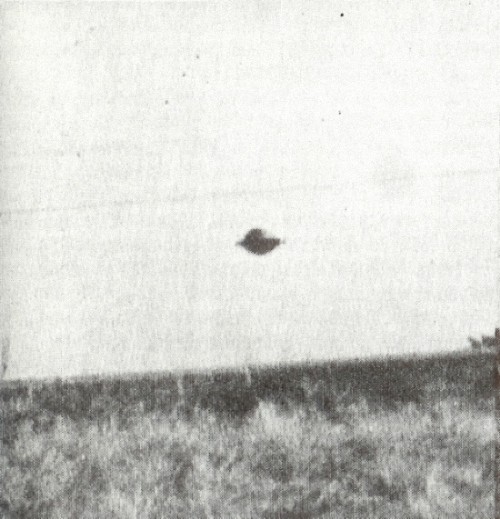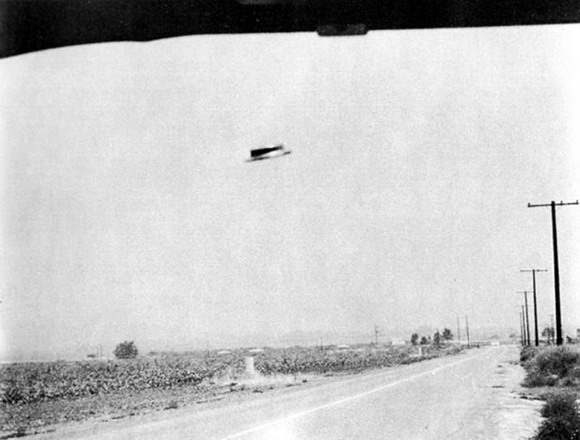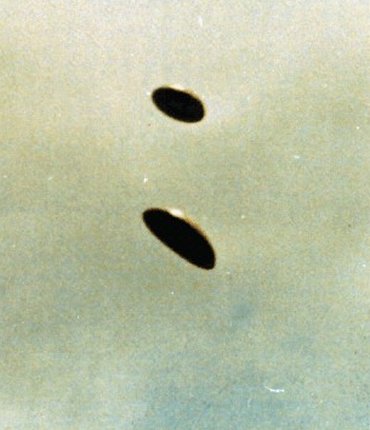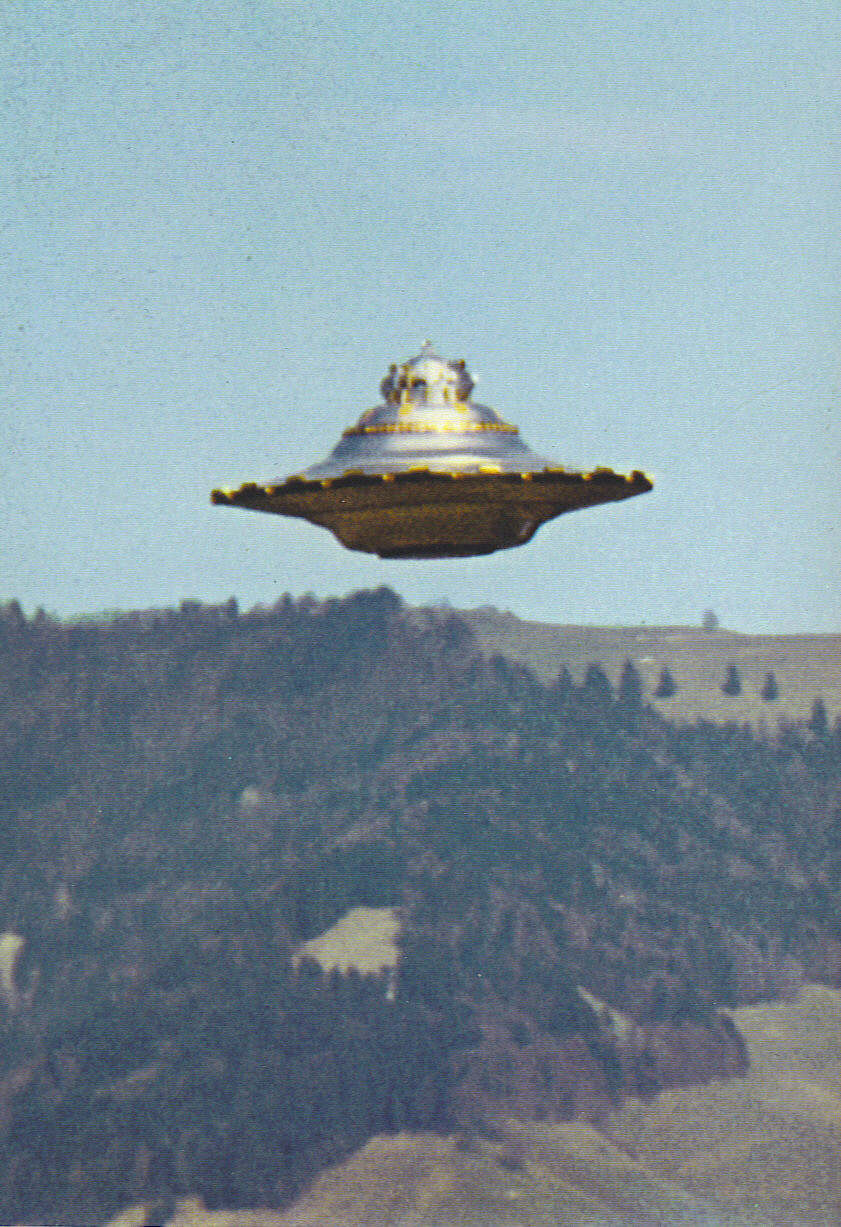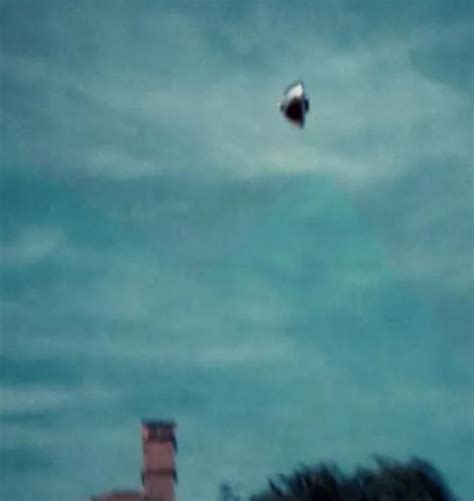
At approximately 2:12 p.m. on Saturday, April 2, 1966, James Johnson Kibel — a 26-year-old Melbourne businessman, civil defense instructor, and qualified engineer who was also a long-standing member of the Victorian Flying Saucer Research Society — stepped into the rear garden of his parents' house at 1 Palm Grove, Deepdene, in the Melbourne suburb of Balwyn. His parents were on holiday and Kibel was overseeing renovations at the property. He had with him an early-model Polaroid camera loaded with instant roll film that had not been used in some time and was beyond its expiry date. His intention was simply to finish the remaining frames in the roll. What he captured instead would become one of the most analyzed, disputed, and compelling UFO photographs ever taken in Australia.
The day was warm, clear, and sunny with unlimited visibility. Kibel had just raised his camera to take a routine photograph when a sudden, intense flash of light illuminated the entire garden — as though a large mirror had reflected concentrated sunlight directly onto it. He looked up immediately toward the source.
It was a warm clear day and suddenly the whole garden became lit up. It was like a reflection from some huge mirror being shone on the garden. I looked up and saw an object, bright and shiny, coming towards me. It would have been between 20 feet to 35 feet in diameter and was about 150 feet up in the air.
— James Kibel, interview with Peter Norris, Victorian Flying Saucer Research Society, 1966The object was silver-metallic, bell-shaped — described by Kibel as resembling an inverted bowl or a dome — and entirely silent. It approached rapidly, descended toward the rooftop level of the house, and briefly hovered. Kibel raised the Polaroid and took a single photograph. He then watched as the object accelerated away and disappeared from view over the roofline. The total observation lasted only a matter of seconds. The object made no sound at any point during his observation. However, as Kibel and a carpenter working at the property waited for the Polaroid to develop, both men heard a loud detonation — described by Kibel as sounding like a plane breaking the sound barrier — emanating from the direction the object had departed.
Although the mysterious craft had been totally silent while I was watching it, after it disappeared we heard a great boom — like a plane breaking the sound barrier.
— James Kibel, recounted in multiple subsequent interviewsKibel immediately rounded the corner of the house to find the carpenter, hoping he had witnessed the event. The carpenter had been working with his back to the garden and had not seen the object. However, he was present as the Polaroid developed and later signed a written statement attesting that the photograph emerged directly from the camera without any subsequent modification or tampering. This statement constitutes the sole independent contemporaneous corroboration of the photograph's authenticity.
The Balwyn photograph was taken on April 2, 1966. Four days later, on April 6, 1966, more than 200 students and staff at Westall High School in Clayton South — a neighboring Melbourne suburb approximately five miles away — witnessed a silver disc land in a paddock adjacent to the school grounds, leave physical trace evidence, and depart. Kibel himself believed there may have been a connection between the two events, though he was careful to note he had no way to verify this. The geographic and temporal proximity of the two events, both involving silver disc-shaped objects in the same metropolitan area within the same week, has been a persistent subject of discussion among researchers.
Kibel was a known figure in Australian UFO research circles and immediately shared the photograph with his contacts. The image was released publicly through the Victorian Flying Saucer Research Society under the pseudonym "James Brown" — Kibel was a high-profile Company Director and wished to avoid professional complications. The photograph was subsequently reproduced in LOOK magazine's special 1967 flying saucers issue, introduced it to an international audience and triggered a series of formal photographic analyses spanning several decades.
In June 1967, American physicist and atmospheric scientist Professor James E. McDonald — widely regarded as the most rigorously scientific investigator of UFO reports in his era — visited Melbourne and conducted an audio-recorded interview with Kibel at the Anderson family home. The recording, preserved in the James E. McDonald collection at the University of Arizona, constitutes the most detailed primary-source account of Kibel's observation. McDonald examined the photograph and expressed concerns about its authenticity — specifically about the scale of reflections visible on the object's surface — while stopping short of a definitive conclusion.
Four independent photographic analyses were subsequently conducted on the image:
A critical dimension of the photograph's analysis centers on the reflections visible on the object's surface. A careful examination shows what appear to be reflections of the house's red-tiled roof and surrounding foliage on the disc's curved underside. Skeptics argued this indicated a small object photographed in close proximity to the house — a hubcap, pram wheel, or mounted bell — rather than a large craft at altitude. Proponents countered that the scale of the visible reflections, if matched against the known geometry of the house and its chimney, implies the object had to be at least as wide as the chimney to produce reflections of that apparent size — meaning it was substantially larger than any small tossed object could account for, and positioned above the roofline rather than in the foreground.
James Fox, director of the 2003 documentary Out of the Blue and the 2020 documentary The Phenomenon, interviewed Kibel on camera for the latter film. In that interview Kibel is seen physically handling the original Polaroid print. Fox later stated that Kibel subsequently mailed him a high-resolution scan of the photograph. This scan revealed a fine line or filament descending from the object that had not been visible in lower-resolution reproductions — interpreted by some analysts as a suspension wire and by others as a scratch or fiber introduced during scanning. The ambiguity of that detail remains unresolved.
The original Polaroid print — the only document that could definitively resolve questions about the photograph's authenticity through direct physical analysis — was stolen in a break-in at Kibel's home in the years following his 2016 public television interview. It was reported as the only item taken in the burglary. As of the time of his death in 2021, the original print had not been recovered, and no subsequent high-resolution forensic analysis of the physical negative was possible.
No government agency investigated the Balwyn photograph. Australia had no equivalent of Project Blue Book at the time and the Department of Air's handling of UFO reports in this period was minimal. The photograph received no official determination and was assessed exclusively by civilian research organizations. All four independent analyses — APRO, Ground Saucer Watch, NICAP, and VFSRS — were conducted on reproductions rather than the original Polaroid print, limiting the conclusions that could be reached about the physical characteristics of the negative.
The case divides analysts principally on the reflection question. If the reflections on the object's surface are genuine environmental reflections of the house, trees, and sky above Balwyn — as a substantial object hovering at 150 feet would be expected to produce — then the scale and content of those reflections argue strongly for a real, large object at altitude. If the reflections are instead consistent with a small model photographed at close range against the house, they argue for fabrication. No published analysis has produced a quantitatively definitive answer either way, because without the original Polaroid's negative density data, photogrammetric calculations cannot be made with adequate precision.
James Kibel consistently maintained the photograph's authenticity until his death on September 16, 2021, at the age of 81. He was notably reluctant to seek publicity — his initial insistence on anonymity, his long silence following early coverage, and his eventual participation in James Fox's documentary only after considerable reluctance all run contrary to the profile of a person seeking attention or notoriety from a fabricated image. Researcher Bill Chalker, who knew Kibel personally over many years, wrote after his death: "He always maintained that his Polaroid photo was genuine, and that although he couldn't be sure, he suspected that there was some link between what he photographed at Balwyn and what was seen by so many at Westall."
All Jim Kibel knows is that the objects were definitely there.
— Professor James E. McDonald, journal notation following his 1967 Melbourne interview with Kibel- Q.01What do the reflections on the object's curved surface represent, and can their scale and content be precisely matched against the known geometry of the house and garden at 1 Palm Grove to determine definitively whether the object was large and distant or small and close?
- Q.02What is the fine filament or line visible in the high-resolution scan sent by Kibel to James Fox — a suspension wire consistent with a hoax, or an artifact introduced during the scanning process? No physical examination of the scan's provenance has been published.
- Q.03The stolen Polaroid was the only item taken in a break-in at Kibel's home. Who took it, and why? The specificity of the theft — a single item of evidentiary significance — has never been explained or investigated publicly.
- Q.04Was there a connection between the Balwyn sighting and the Westall incident four days later? Both events involved silver disc-shaped objects in the same metropolitan area within the same week. No formal comparative analysis of the two descriptions has been published.
- Q.05The carpenter at the property heard the sonic boom and witnessed the Polaroid develop, but did not see the object. His signed statement has never been publicly produced in full. What does it say in its entirety?
- Q.06Kibel's family had multiple prior sightings from the same garden — his mother in 1954, Kibel himself in 1958 with his fiancée. What does the pattern of repeated sightings at the same location imply, and have any of those prior incidents been formally documented?
- Q.07Kibel told McDonald in 1967 that he had written a full report of the incident. That report's current location — whether in the NICAP files, the VFSRS archive, the CUFOS collection, or elsewhere — has never been publicly confirmed.