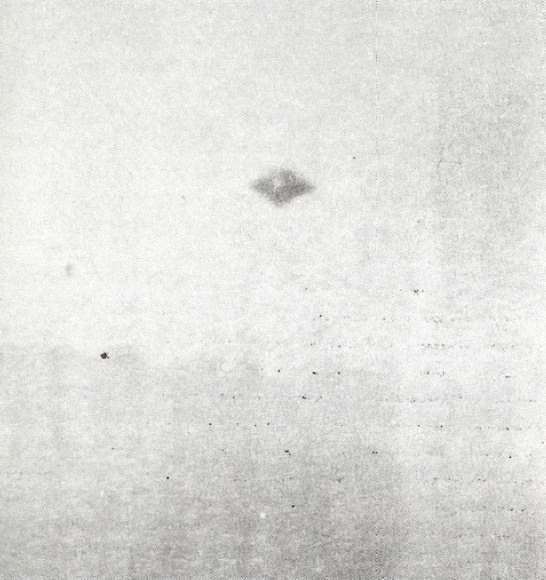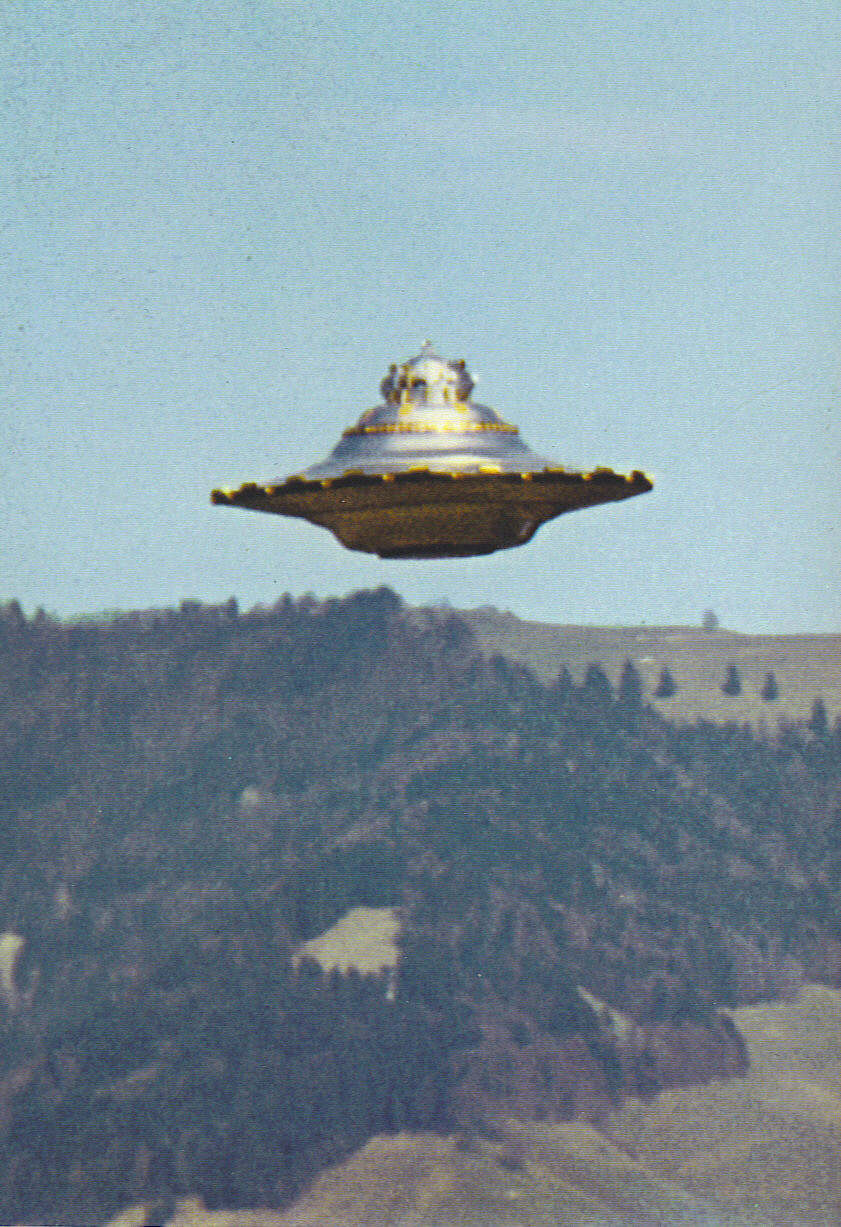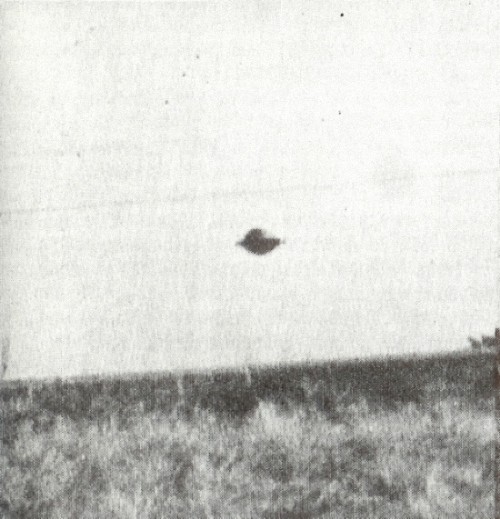
On the morning of May 12, 1976, Mr. Joshua da Silva and Mr. Gesareo Goncalves were driving in Goncalves' car from Iteri to Passo Fundo, Brazil, in the state of Rio Grande do Sul. At approximately 10:00 a.m., when they were less than 50 kilometers (31 miles) from Passo Fundo, near the Jacui River, da Silva spotted a silver metallic spherical object resembling the planet Saturn — replete with ring — hovering at low altitude.
Gesareo drove slowly toward the object until they were abreast of it, at which point it was approximately 20 meters (130 feet) distant. The object had a distinct "brushed metal" surface and was estimated by both witnesses to be between six and eight meters (20 to 26 feet) in diameter — a size consistent with a small vehicle or aircraft rather than a large craft. When the car stopped, the object began to descend.
Da Silva turned in his seat and fumbled in a bag in the back seat to retrieve his Kodak Rio camera, loaded with color film. As the car came to a stop, the object began to descend. Da Silva snapped one photograph, rolled the film, and snapped a second — at which point the object began moving to the northeast, accelerating rapidly until it was out of sight. It was gone in just seconds. The entire encounter, from initial observation to rapid departure, was brief but sufficient for two photographs to be captured at close range.
At ten A.M. when they were less than fifty kilometers from Passo Fundo, near the Jacui River, da Silva spotted a silver metallic spherical object resembling the planet Saturn, replete with ring. Gesareo drove slowly toward it until they were abreast and it was approximately twenty meters distant. They estimated the object which had a "brushed metal" surface to be six to eight meters in diameter.
When the car stopped, the object began to descend. Da Silva snapped one photo, rolled the film and snapped another, whereupon the object began moving into the Northeast, increasing its speed as it went, until it was out of sight. It was gone in just seconds.
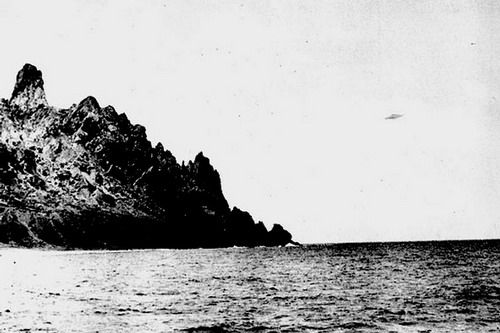
— Joshua da Silva and Gesareo Goncalves, witness account · APRO Bulletin, November 1978Technicians at El Globo, one of Rio de Janeiro's major newspapers, examined the negative and stated that they could find no evidence of a hoax. The object was observed and photographed at close range under excellent lighting conditions — a 10:00 a.m. daytime sighting in clear weather — giving both witnesses ample opportunity to assess its size, distance, surface characteristics, and behavior. The brushed metal appearance, Saturn-like profile, and low-altitude descent before rapid departure are characteristics shared with the Trindade Island photographs of 1958.
The photographs were forwarded to the Aerial Phenomena Research Organization (APRO) and published in the November 1978 APRO Bulletin as part of a comparative analysis of two Saturn-shaped disc sightings in Brazil — the da Silva/Janusas photographs from Rio de Janeiro (June 1978) alongside the Passo Fundo photographs from May 1976. The bulletin noted explicitly: "It is interesting to note how closely the Janusas and da Silva photos resemble the Trindade photos of 1957."
The El Globo newspaper technicians' examination of the original negative found no evidence of a hoax — a significant finding given that the witnesses had no connection to the UFO research community and were engaged in ordinary travel when the encounter occurred. Their account is free of the embellishments that sometimes characterize post-hoc witness testimony, and the photographic evidence is consistent with their description of the object.
Three independent photograph sequences, three witnesses, two decades, one morphology. The Saturn-shaped disc profile — a flattened disc body with a ring through the midsection — appears consistently across:
1. Trindade Island, January 16, 1958 — Almiro Baraúna photographed a Saturn-shaped metallic disc over the South Atlantic. 48 witnesses aboard the Almirante Saldanha. Brazilian Navy authentication; Ground Saucer Watch (1978) unanimous authentication. Object estimated over 50 feet in diameter via computer analysis.
2. Passo Fundo, Brazil, May 12, 1976 — Joshua da Silva and Gesareo Goncalves photographed a Saturn-shaped disc near Jacui River. Object estimated at 6-8 meters (20-26 feet) diameter at approximately 20 meters distance. El Globo technicians found no evidence of hoax.
3. Rio de Janeiro, June 1978 — Saul Janusas photographed a Saturn-shaped disc from a bus near Rio de Janeiro International Airport. Two photographs, 20 seconds apart. Object profile identical to both preceding cases.
Three independent witnesses in different locations, two decades apart, producing photograph sequences with identical object morphology — a convergence that cannot be readily explained by coincidence or common misidentification of any known aerial phenomenon.
The Passo Fundo sighting is among the closest-range Saturn-shaped disc observations on record. At approximately 20 meters (130 feet) distance, with the object descending toward the stationary vehicle, both witnesses had an extended opportunity to observe and photograph the object under excellent conditions: daytime, clear weather, stationary vantage point. The 6-8 meter estimated diameter placed the object within easy visual range of a small car. The two photographs captured at this range provide substantially more detail than distant surveillance-type observations, including the brushed metal surface texture noted by both witnesses.
The Passo Fundo photographs represent one of three documented Saturn-shaped disc photograph sequences from Brazil spanning 1958 to 1978, and one of the closest-range observations of this morphology on record. At approximately 20 meters distance, with the object descending toward the stationary vehicle, the witnesses had an extended opportunity to assess the object's characteristics under optimal observation conditions.
The object profile — a silver metallic disc with a ring through the midsection, resembling the planet Saturn — is identical across all three Brazilian Saturn-disc photograph sequences. The Passo Fundo object's estimated diameter of 6-8 meters places it in the same size class as a small aircraft or light vehicle. The brushed metal surface texture noted by both witnesses is consistent with the metallic reflectance documented in the Ground Saucer Watch analysis of the Trindade photographs, and the object's descent followed by rapid acceleration and departure is consistent with the behavioral pattern documented at Trindade.
No conventional explanation has been advanced in the peer-reviewed literature for the specific Saturn-shaped disc morphology that recurs consistently across these three Brazilian photograph sequences. The convergence of three independent witnesses, three different locations, and two decades — producing photographs with identical object morphology — is a pattern that significantly exceeds what random coincidence or common misidentification would predict. The El Globo newspaper technicians' finding of no hoax evidence in the original negative further supports the authenticity of the observation and the photographs.
- Q.01Are the original negatives or transparencies from the Passo Fundo sighting preserved, and could they be subjected to modern digital scanning and photogrammetric analysis? High-resolution digital analysis would permit more precise estimation of the object's distance, size, and flight characteristics than was possible in 1976, and could provide additional data on the object's surface characteristics and structural details.
- Q.02What determined the specific 6-8 meter diameter estimated for this object? The size estimate at 20 meters distance was made by two witnesses simultaneously and is consistent across both accounts. This size class — similar to a small aircraft — is significantly smaller than the Trindade object (estimated over 50 feet in diameter by Ground Saucer Watch). Does the Saturn-disc class of objects include a range of sizes, or could size estimates vary based on different atmospheric and perspective conditions at different observation distances?
- Q.03What physical mechanism produces the characteristic Saturn-shaped disc profile — a flattened disc body with a ring through the midsection — consistently across three independent photograph sequences spanning two decades? No known aircraft, experimental vehicle, or atmospheric phenomenon produces this specific morphology with the consistency documented here. The recurrence of this specific morphology across two decades of Brazilian sightings suggests a consistent object class warranting dedicated analytical treatment in the comparative UFO literature.
- Q.04Were there other sightings of Saturn-shaped discs in Brazil or the broader South American region during the 1958-1978 period that did not result in photographic evidence? The three known photograph sequences may represent the visible fraction of a more continuous phenomenon whose full extent is undocumented. Systematic review of Brazilian UFO archives for additional sightings of this morphology during this period would help establish whether the Saturn-disc represents a recurring object class or a series of unrelated coincidences.
The Passo Fundo sighting is one of three documented Saturn-shaped disc photograph sequences from Brazil spanning 1958 to 1978. All three cases share identical object morphology — a flattened disc body with a ring through the midsection — across different witnesses and locations. The convergence across two decades is a pattern that significantly exceeds what random coincidence would predict.
View Related Case: Trindade Island UFO (Brazil, 1958) →
View Related Case: Janusas UFO Photos (Rio de Janeiro, 1978) →