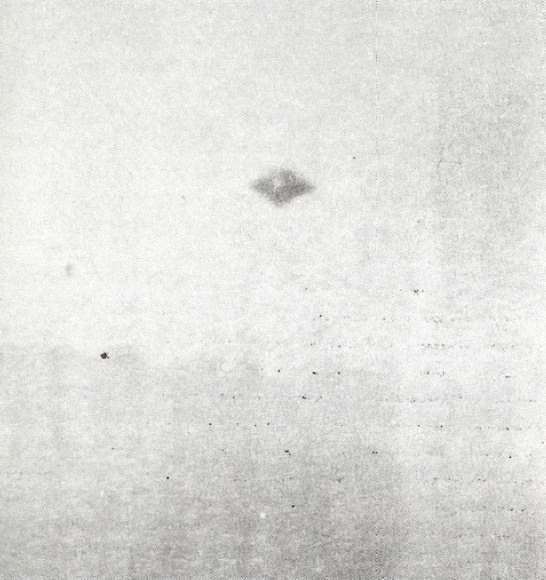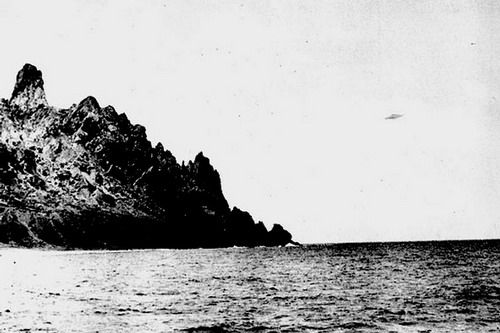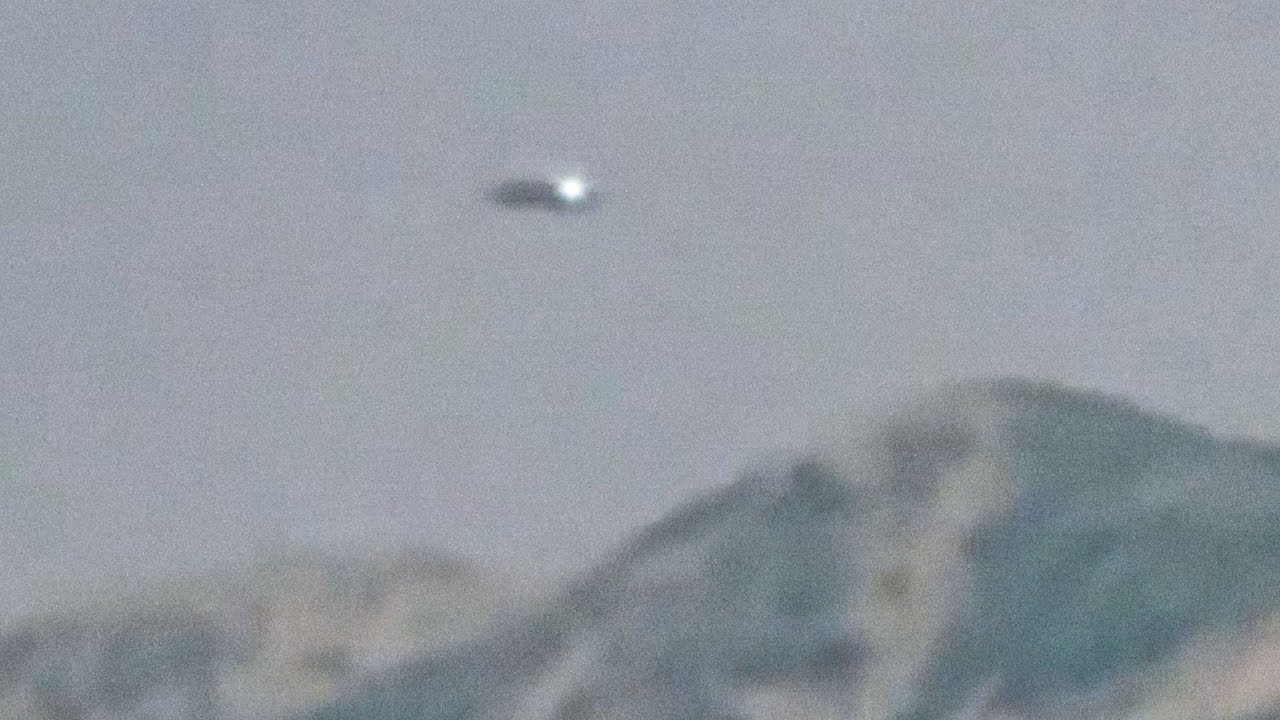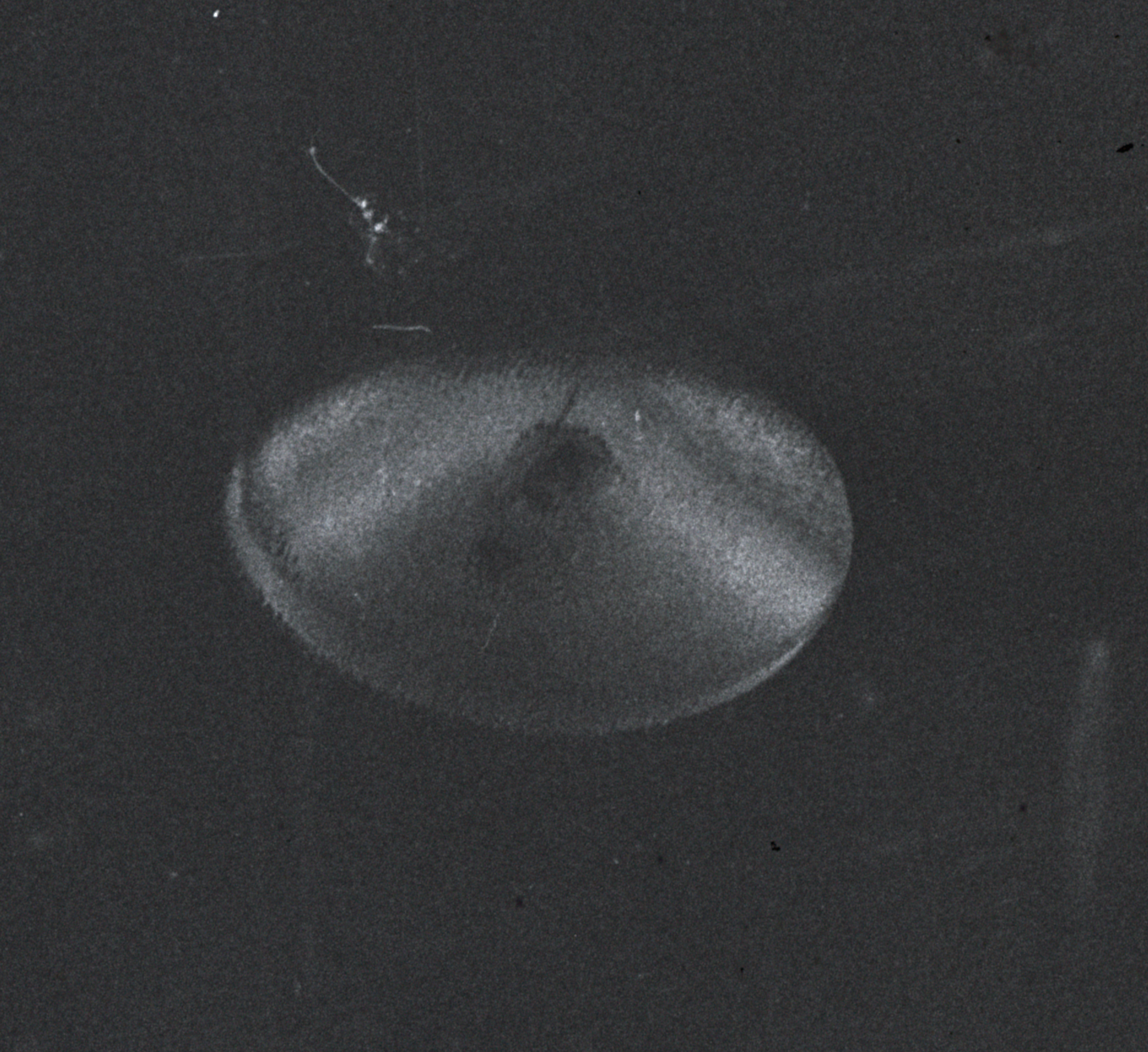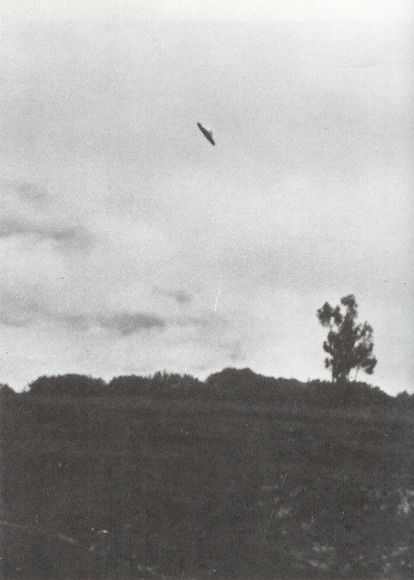
At 2:00 p.m. on June 21, 1977, an unidentified civilian witness in Centeno, Santa Fe, Argentina captured a remarkable color photograph of an unidentified flying object. The witness was outdoors in the middle of the day when the object appeared overhead, flying at altitude above the treeline and beneath a layer of puffy white clouds. The witness raised a camera and captured a single color photograph of the craft before it departed.
The resulting photograph shows a metallic, disc-shaped object with a distinctive raised cupola on its upper surface. The craft displayed a brushed-silver outer body, characteristic of the classic disc morphology seen in numerous daytime UFO sightings worldwide. Most notably, the dome structure featured a three-tiered configuration with distinctly colored elements: red-orange, light yellow, and reddish-gold features visible around the dome assembly. The object's surface was notably smooth and unbroken, revealing no visible seams, rivets, joints, or other projections that would be expected on conventional aircraft or known aerial phenomena.
The combination of daytime observation, clear weather with visible cloud layers providing environmental context, and a color photograph taken by a civilian with no apparent connection to the UFO research community gives the case a meaningful position in the South American UFO photograph record of the late 1970s.
The photograph reveals an object whose morphology is consistent with the classic domed disc configuration that recurs throughout the global UFO photograph record — from the McMinnville photographs of 1950 to the numerous daytime sightings of the 1970s South American UFO wave. Several specific features of this object warrant analytical attention.
Disc body: The outer hull of the object appears circular in plan view, with a uniform brushed-silver metallic finish. The absence of visible panel lines, rivets, seams, or structural discontinuities on the disc body is significant — conventional aircraft and experimental vehicles at any technological level require structural fasteners, access panels, and surface instrumentation that would be visible at this observation distance and angle.
Three-tiered cupola: The raised dome structure on the upper surface is described as having a three-tiered or multi-layered configuration, with three distinct colored elements visible: red-orange, light yellow, and reddish-gold. This tiered dome architecture is not consistent with any known aircraft configuration, radome, or sensor housing.
Coloration: The three-tone dome coloration — red-orange, light yellow, and reddish-gold — is a feature that appears in other South American UFO cases from the 1970s wave. Whether these colors represent emissive elements (lights or heated surfaces), reflective properties of the dome material under daylight conditions, or painted identification markings is unknown from the available documentation.
June 1977 falls within the peak period of the great South American UFO wave of the mid-to-late 1970s, which produced a significant volume of high-quality photographic and radar evidence across Brazil, Argentina, Uruguay, and surrounding countries. The wave included the Saturn-shaped disc sequence in Brazil (Trindade 1958, Passo Fundo 1976, Janusas 1978), the Alberti, Buenos Aires photograph (May 28, 1977), and numerous other documented sightings across the region. The concentration of high-quality photographic cases during this period remains one of the most significant clusters in the global civilian UFO record.
The Centeno photograph represents a significant entry in the South American UFO photograph record of the 1970s. The image captures a metallic disc-shaped object with a distinctive raised, multi-tiered cupola — a morphology that, while recurring in the global UFO photograph record, is not consistent with any known aircraft, experimental vehicle, or atmospheric phenomenon documented in the aerospace literature. The three-tone dome coloration (red-orange, light yellow, reddish-gold) adds a further element of morphological specificity that conventional explanations do not readily account for.
The observation occurred in clear daytime conditions with a cloud layer providing environmental context that anchors the object's position in three-dimensional space. The civilian witness had no documented connection to the UFO research community, and the photograph was not the product of any known intentional staging scenario. The single-image format is consistent with an unplanned, spontaneous capture rather than a prepared hoax attempt.
The principal limitations of the case are the absence of additional witness testimony (the source is anonymous), the single photograph (no sequence or multiple angles), and the lack of information regarding any investigation or authentication process applied to the original photograph. Without knowing whether the original negative or a higher-generation copy of the photograph is available for analysis, the evidential weight that can be assigned to the image is constrained by the available documentation.
- Q.01What is the significance of the three-tiered cupola configuration and its distinctive three-tone coloration (red-orange, light yellow, reddish-gold)? This multi-colored dome element is not consistent with any known aircraft antenna, radome, sensor housing, or navigation lighting configuration. Could the colors represent emissive elements, heated surfaces under solar radiation, or structural dome architecture?
- Q.02Could the original negative or a higher-generation copy of the Centeno photograph be located and subjected to digital photogrammetric analysis? If the original film or a high-quality print is available, modern image analysis techniques could provide estimates of the object's distance, angular size, and surface characteristics that were not possible at the time of the original documentation.
- Q.03Is the anonymous civilian witness identifiable, and if so, does additional testimony exist regarding the observation circumstances, the duration of the sighting, any sounds or smells, and the object's behavior? The absence of witness testimony significantly limits the case file and represents the most important avenue for further investigation.
- Q.04Was the Centeno sighting part of the broader 1977 South American UFO wave that produced the Alberti photograph (May 28, 1977), the Entre Ríos photograph (June 1, 1978), and numerous other documented sightings across Argentina and Brazil during this period? The geographic clustering and temporal concentration of high-quality photographic cases during the mid-to-late 1970s wave warrants systematic comparative analysis that has not yet been conducted.
- Q.05What determined the specific June 21, 1977 date and 2:00 p.m. time? The daytime timing with clear cloud cover provided excellent conditions for both visual observation and photography — was this a coincidence, or does the pattern of daytime, clear-weather sightings during the 1977 wave suggest that the phenomenon preferentially manifests under conditions favorable to visual and photographic documentation?