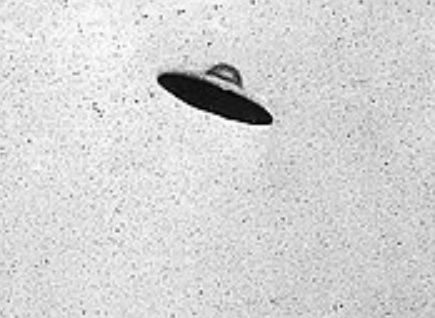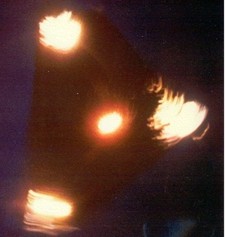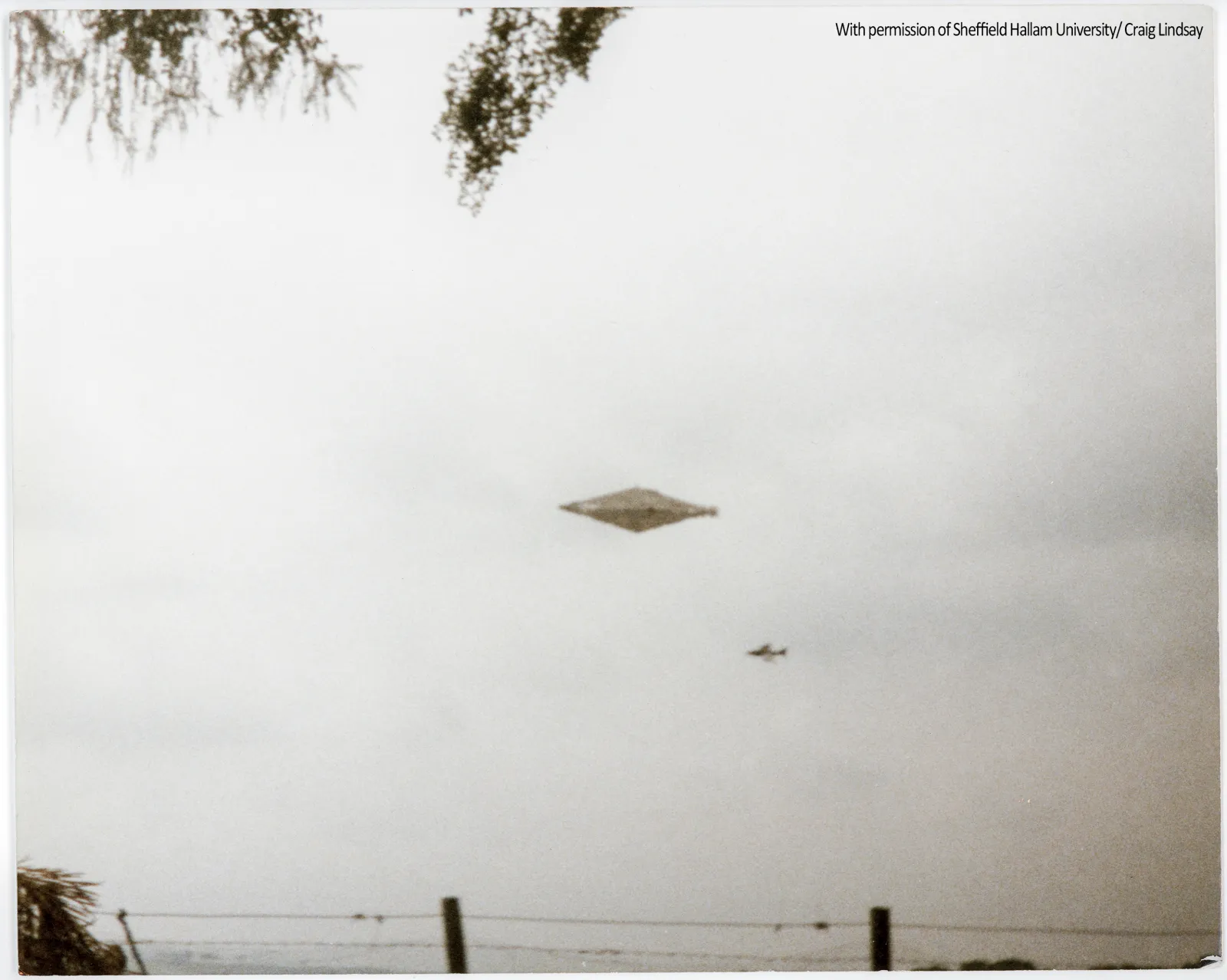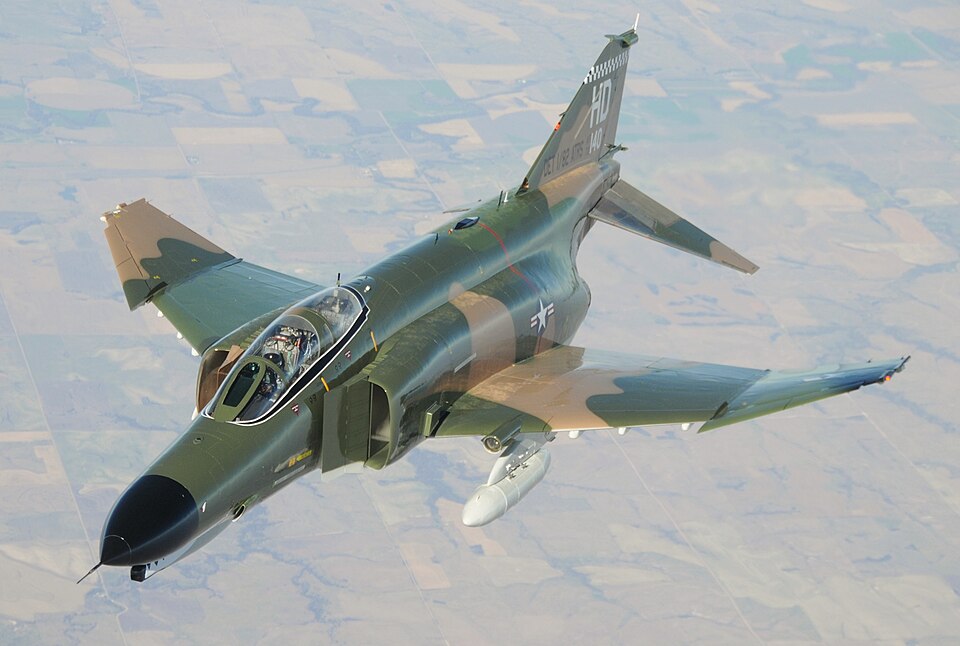
In the early morning hours of September 19, 1976, the Imperial Iranian Air Force (IIAF) scrambled two F-4 Phantom II jet interceptors from Shahrokhi Air Force Base to investigate reports of an unusual bright light over Tehran. The sighting had originated from civilian observers and was forwarded to IIAF headquarters, where General Yousefi ordered an intercept after ground radar confirmed an anomalous airborne contact over the city. What followed over the next approximately two hours was one of the most operationally significant military UAP encounters in Cold War history.
The first F-4, flown by a single pilot, was vectored toward the target and made visual contact with an extraordinarily bright object. As the aircraft closed to within approximately 25 nautical miles, all instrumentation and communications aboard the F-4 simultaneously failed — radios, instruments, and navigation systems went dark simultaneously. When the pilot broke off the approach and turned away from the target, all systems immediately restored full function. This pattern of instrumentation failure correlated with proximity to the object and immediate restoration upon departure would be repeated during the second intercept, establishing the most definitive case of apparent active electronic interference with military aircraft systems in any documented UAP encounter.
The second F-4, crewed by pilot Major Parviz Jafari and weapons systems officer Lieutenant Jalal Damaghi, was vectored in as the first aircraft returned to base. Jafari made radar lock on the target and described an object with luminosity that appeared to rival a star — fluctuating between blue, green, red, and orange lights cycling rapidly, with the strobe-like pattern covering an area roughly equivalent to a Boeing 707 in visual size. The object maneuvered with apparent ease to avoid the aircraft's approaches, accelerating and changing heading when Jafari maneuvered to close distance.
At one point, a smaller object appeared to separate from the main body and fly directly toward Jafari's aircraft on what he interpreted as an attack profile. Jafari attempted to fire an AIM-9 Sidewinder air-to-air missile. At the precise moment he depressed the firing trigger, his weapons control panel went completely dead — the aircraft's entire fire control and weapons system ceased to function instantaneously. The smaller object circled his aircraft and returned to the main object. When a second smaller object separated and descended toward the ground north of Tehran, Jafari followed its descent and reported seeing what appeared to be a bright object land on or near the ground, with a cylindrical object visible afterward shining a light on the ground below.
Both crews landed and were debriefed immediately. Their accounts were consistent with each other and with the ground radar data collected during the event. A U.S. Defense Intelligence Agency (DIA) analyst stationed at the American military advisory mission in Iran compiled a detailed assessment of the incident, rating it as an "outstanding report" and noting it as an example of "a classic, confirmed sighting" based on the quality of the witnesses, the radar corroboration, and the aircraft instrument effects. This DIA cable — declassified decades later — is one of the most significant official U.S. government assessments of a foreign military UAP encounter in the Cold War record.
The U.S. Defense Intelligence Agency's assessment of the Tehran incident, compiled from the reports of American military advisers present with the IIAF, is the central official document in the Western record of the case. The DIA cable classified the encounter as an "outstanding report" — the agency's designation for a UAP report of exceptional quality and credibility — and noted specifically the instrumentation and weapons system effects as distinguishing features of particular interest. The cable was transmitted to the Secretary of State, the Secretary of Defense, the National Security Council, and the Director of Central Intelligence, indicating it was treated as a matter of senior national security interest.
The Imperial Iranian Air Force conducted its own after-action investigation, collecting debriefings from both crews and correlating their testimony with the ground radar data from Tehran Airport and Shahrokhi Air Force Base. The physical location where the smaller object appeared to land north of Tehran was reportedly inspected the following day. Investigators found a beeper transmitter — a standard survival radio used by military aircrew — at the landing site, which has been cited as possible evidence of a landed object but has also been used by skeptics to suggest a misidentification of rescue beeper activity.
The case was reviewed by multiple independent UAP researchers over the following decades. Atmospheric physicist Dr. James McDonald examined it in the context of his broader UAP research and assessed the instrumentation effects as particularly significant, noting they were inconsistent with any natural electromagnetic phenomenon that could also produce the visual effects described by the crew. The NARCAP analysis of the Tehran case highlighted the weapons system failure as a potential aviation safety issue of the highest priority — the only known case of a UAP apparently disabling a military aircraft's weapons systems in real time during an intercept attempt.
The 1979 Iranian Revolution and the subsequent rupture of U.S.-Iranian relations effectively ended any possibility of continued cooperative investigation. Iranian military records from the IIAF, including more detailed flight data recorder information and additional crew reports that may have been filed through Iranian military channels, are inaccessible in any publicly known archive and may have been destroyed or remain deeply classified within whatever Iranian military records systems survived the revolutionary period.
The case has maintained consistently high credibility ratings among UAP researchers across four decades of analysis. The combination of two independent military intercept crews providing consistent testimony, corroborating ground radar data from two separate facilities, an official U.S. DIA "outstanding report" classification, and the unprecedented apparent active interference with aircraft instrumentation and weapons systems makes it one of the most operationally significant and technically detailed military UAP cases in the global record.
No official conclusion identifying the Tehran object has ever been issued by any government. The U.S. DIA's assessment — the most authoritative Western official document in the case — explicitly designated it an outstanding UAP report without attempting a conventional identification. No subsequent declassified document has been produced offering a satisfactory alternative explanation for the encounter's totality, including the instrumentation effects, the weapons system failure at the precise moment of firing, and the corroborating radar data.
The apparent active disabling of military aircraft systems during an intercept attempt is the Tehran incident's most extraordinary and consequential feature. Whether this represents electromagnetic interference from a known or unknown source, a remarkable coincidence of equipment failures timed precisely to the intercept geometry, or some other mechanism has never been analyzed in any publicly available scientific study with access to the aircraft's maintenance records, the specific sequence of system failures, and the electromagnetic environment of the Tehran area on the night of September 19, 1976.
The case has been assessed by researchers including Dr. McDonald, Dr. Haines, and the NARCAP team as among the handful of UAP encounters globally that most urgently warrant serious scientific investigation. Its combination of radar corroboration, multiple military witness consistency, DIA official recognition, and the operationally significant weapons system effect makes it qualitatively different from the majority of UAP reports and one of the strongest individual cases in any national military record.
Tehran 1976 remains one of the most consequential unresolved military UAP cases from the Cold War era and a central reference point in discussions of UAP encounters involving apparent active interference with military aircraft systems — a category that has been specifically noted in U.S. congressional UAP hearings as representing a potential national security concern of the first order.
- Q.01What electromagnetic mechanism could simultaneously disable all aircraft instrumentation and communications at a specific range and restore them instantaneously upon departure? The pattern — failure correlated precisely with approach and restoration correlated precisely with departure — is highly specific and inconsistent with random equipment failures or conventional electromagnetic interference sources such as atmospheric phenomena or ground-based emitters.
- Q.02Did the weapons control panel failure at the moment of missile firing represent active electronic countermeasures or a remarkable coincidence? The precise timing of the fire control system failure — at the moment Major Jafari's finger depressed the firing trigger — has no satisfactory coincidental explanation. Whether this represents active interference targeted at the aircraft's weapon system, a system failure triggered by the aircraft's own radar emissions reflecting off the object, or some other mechanism has never been formally analyzed.
- Q.03What was found at the site north of Tehran where the smaller object appeared to land? A rescue beeper transmitter was reportedly recovered at the site the following morning. Who left it, whether its presence was consistent with or inconsistent with the observed object's touchdown, and what other physical evidence if any was collected at the site has not been established in publicly available accounts of the Iranian Air Force's post-incident ground investigation.
- Q.04What additional documentation was compiled by the IIAF and may still exist in Iranian military archives? The Iranian Air Force would have generated maintenance records for the affected aircraft, formal intelligence assessments through IIAF channels, and possibly more detailed flight data than what was captured in the U.S. DIA cable. Whether these records survived the 1979 revolution and what they might reveal about the incident from the Iranian military's perspective is an open archival question.
- Q.05What was the nature of the apparent smaller objects that separated from the main body? Both an approach toward Jafari's aircraft and a descent to the ground were described. Whether these were separate craft, projected energy, luminous plasma, or another phenomenon consistent with the main object's characteristics has never been analyzed in any published scientific study with access to both crew testimonies simultaneously.
- Q.06What does the Tehran incident reveal about the potential threat posed by UAP capable of disabling military aircraft systems? If UAP can reliably disable aircraft instrumentation and weapons systems in a targeted and reversible manner during intercept attempts, the national security implications are profound — potentially more significant than any physical threat posed by the objects' flight characteristics alone. This concern has been raised in closed congressional UAP briefings, and whether AARO's current research mandate includes systematic analysis of electronic effects on military platforms during UAP encounters is a critical question for the program's completeness as a national security investigation effort.