Beginning in late November 1989 and continuing through the spring of 1990, Belgium experienced the most sustained and systematically documented wave of mass UAP sightings in modern European history. Over a period of approximately five months, an estimated 13,500 citizens filed formal reports with Belgian authorities describing large, low-flying triangular or delta-shaped objects traversing the country at night. The wave was concentrated in the provinces of Liège and Luxembourg in the east of the country but extended across the entire Belgian territory and into neighboring Luxembourg, the Netherlands, and northern France.
The initial reports began on the evening of November 29, 1989, when two Belgian gendarmerie officers — Gendarmes Von Montigny and Nicoll — observed a large triangular object flying silently at low altitude near Eupen. They described a craft with three powerful white lights at its corners and a central red or amber pulsating light, moving at slow speed inconsistent with conventional fixed-wing aircraft but without any rotary-wing sound signature. Their detailed, formally filed police report became the first in what would grow into a massive documented event record.
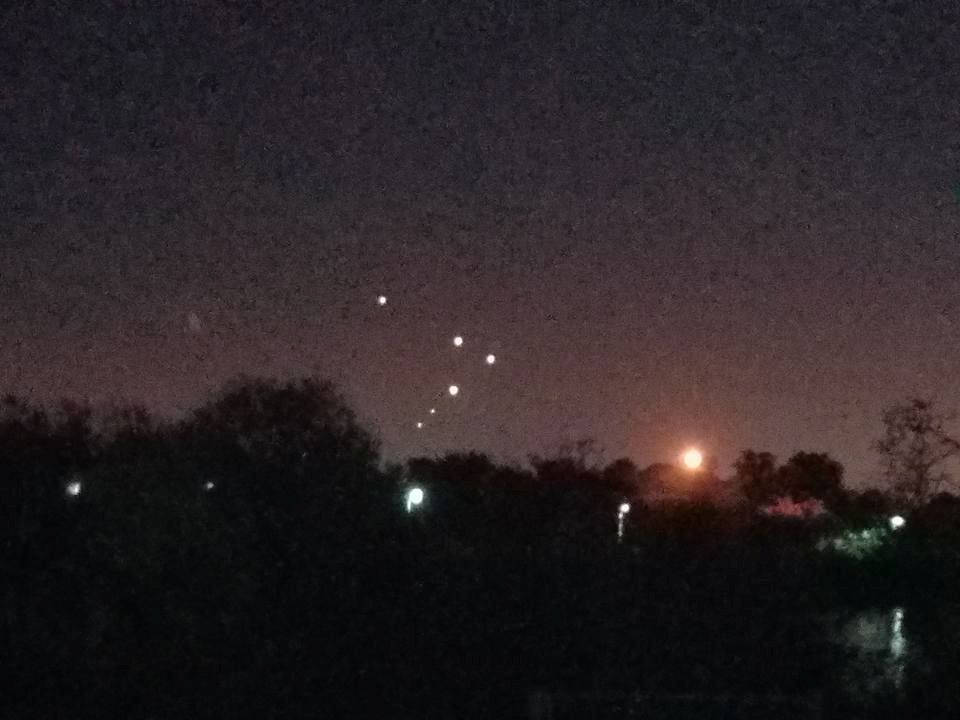
Throughout December 1989, January and February 1990, hundreds of additional reports accumulated with striking consistency. Witnesses across geographically separated locations independently described the same object characteristics: a triangular platform, three white lights at each corner, a central blinking colored light, completely silent flight at low altitude and slow speed, and occasional rapid acceleration to high speed and altitude. The consistency of these descriptions across observers with no communication with each other was one of the most striking features of the event record and distinguished the Belgian wave from more ambiguous mass sighting events.
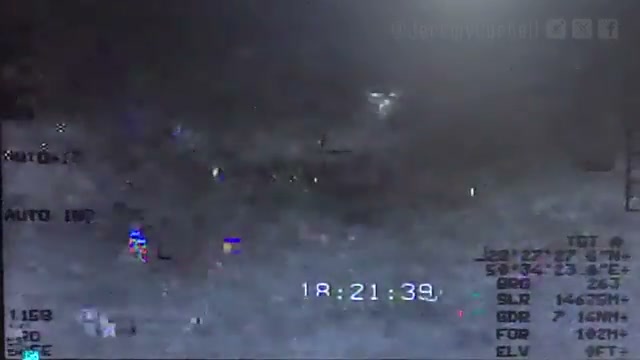
The most operationally significant event of the wave occurred on the night of March 30–31, 1990. The Belgian Air Force scrambled two F-16 Fighting Falcon interceptors from Beauvechain Air Base after NATO radar systems and Belgian Air Force ground radar at Glons and Semmerzake simultaneously tracked anomalous contacts over the country. The F-16 pilots locked on to radar contacts three times during the pursuit, and in each instance the target performed maneuvers the pilots characterized as impossible for any known aircraft — accelerating from approximately 280 knots to over 1,000 knots in seconds and changing altitude by thousands of feet in moments before the lock was broken.
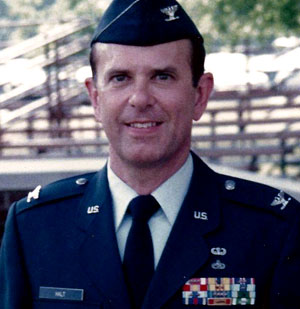
The March 30 intercept attempt was notable for the completeness of its documentation. The Belgian Air Force released its own radar tapes, flight data recorder information, and a detailed operational analysis of the intercept to the public and to civilian researchers — an unprecedented degree of military transparency for a UAP case anywhere in the world at that time or since. General Wilfried De Brouwer, chief of operations for the Belgian Air Force, personally held press conferences discussing the incidents and the military's inability to identify the objects, lending exceptional institutional credibility to the public record of the event.
The Belgian Air Force conducted an unusually open and rigorous official investigation in close collaboration with the Société Belge d'Étude des Phénomènes Spatiaux (SOBEPS), a civilian UAP research organization. This collaboration — between a national military and a credentialed civilian research body — was unique in UAP history and produced one of the most comprehensive public records of any military UAP investigation. SOBEPS was granted access to witness reports, radar data, and military personnel for direct interviews, producing a two-volume report that remains a landmark in scientific UAP documentation.
The Belgian Air Force's analysis of the March 30 F-16 intercept focused specifically on the radar performance data. The released tapes showed the target contact performing acceleration maneuvers registering approximately 40g — a force that would be instantly lethal to any human pilot and that exceeds the structural limits of any known aircraft. General De Brouwer acknowledged these measurements publicly and stated that no conventional aircraft or known drone in existence at the time was capable of the recorded performance. The Belgian Air Force explicitly ruled out American stealth aircraft including the F-117 Nighthawk, which had been publicly disclosed in 1988, after direct inquiry to U.S. authorities yielded a denial of any American aircraft operating over Belgium during the wave period.
NATO's Supreme Headquarters Allied Powers Europe (SHAPE), located in Belgium, was consulted regarding the radar data and the possible involvement of any classified NATO assets. NATO confirmed that no allied aircraft were operating in the relevant airspace during the intercept events. The consultation of NATO as an investigative partner further expanded the institutional scope of the Belgian investigation beyond what any comparable national UAP inquiry had achieved.
The Belgian government's posture toward the investigation was exceptional in global context. Rather than applying pressure to minimize or classify the events, Belgian authorities actively supported transparent investigation and public communication. This government-sanctioned openness allowed SOBEPS to build an extraordinarily detailed case record and contributed to the wave being the most comprehensively documented sustained UAP event in European history — arguably in world history — for the modern era.
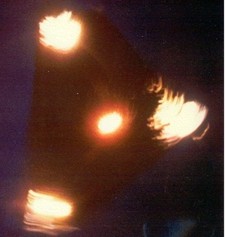
A well-known photograph taken at Petit-Rechain in April 1990 showing a triangular object with lights at each corner received extensive analysis. In 2011, a Belgian man named Patrick Maréchal claimed to have faked the image using painted styrofoam. His claim has been disputed by some researchers who point to inconsistencies in his account and the difficulty of replicating the photograph's specific qualities with the materials described. Whether the Petit-Rechain photo is authentic or fabricated remains genuinely contested, though most researchers have moved the evidentiary weight of the Belgian wave case away from the photograph and toward the radar data and military witness testimony, which are unaffected by the photo's status.
The Belgian Air Force's official conclusion, articulated publicly by General De Brouwer, is that the objects observed and tracked during the 1989–1990 wave were genuinely unidentified and that no conventional explanation — including misidentification of known aircraft, weather phenomena, or atmospheric optics — adequately accounts for the totality of the evidence. This conclusion, from a national air force chief of operations and delivered publicly rather than buried in classified archives, is one of the most authoritative official UAP determinations ever issued by any government.
The Belgian wave's significance in UAP history rests on the unmatched convergence of evidence: 13,500 civilian witnesses providing consistent descriptions, simultaneous radar tracking on multiple independent military systems, two F-16 intercept attempts with onboard radar lock confirming a real physical target, maneuver data showing performance far exceeding known aircraft limits, and military leadership that openly acknowledged the unexplained nature of the events. No conventional explanation has been produced in the three-plus decades since the wave that accounts for all these elements simultaneously.
The Belgian government's decision to conduct an open, collaborative investigation rather than the reflexive classification that characterized U.S. and UK handling of comparable events has been cited repeatedly by UAP researchers and policy advocates as the model for how national governments should respond to sustained UAP activity. The transparency of the Belgian approach produced a far richer public evidential record than any comparable event in other countries and demonstrated that official engagement does not require admission of extraordinary conclusions.
The Belgian wave case remains officially unresolved and has never been closed. Its radar data — the most rigorously documented military UAP radar record in the publicly available global record — continues to be a central reference point in scientific and policy discussions about what modern UAP investigations must be equipped to detect and document, and what performance envelopes any credible UAP investigation must be prepared to evaluate.
- Q.01What produced the 40g acceleration readings on the F-16 onboard radar during the March 30 intercept? The recorded acceleration figures have never been explained as radar artifacts or instrument errors by any published technical analysis. Whether these readings represent actual object performance, a radar anomaly produced by an unusual atmospheric condition, or electronic countermeasures from an adversarial platform has not been definitively established.
- Q.02Did the wave involve a single recurring object, multiple objects, or many different platforms? The geographic spread of the sightings — covering all of Belgium over five months — makes it unclear whether a single triangular craft was repeatedly traversing the country, whether multiple craft were operating simultaneously, or whether the wave represents different phenomena being grouped together under common descriptive characteristics.
- Q.03Were any U.S. classified programs operating in European airspace during the wave period that have since been declassified? The wave coincided with active development and testing of classified American aerospace programs. Whether any since-declassified program could account for Belgian observations — even partially — has not been systematically evaluated against the wave's full evidence record in any publicly available study.
- Q.04Is the Petit-Rechain photograph authentic or fabricated? The claimed confession of fabrication in 2011 introduced significant uncertainty about the most widely circulated photographic evidence from the wave. Whether forensic analysis of the original photograph — if it still exists — could definitively resolve this question has not been publicly explored, and the case's broader evidential value is independent of this single image's authenticity.
- Q.05Why did the wave end as abruptly as it began in April 1990? Mass UAP events of this character and duration ending suddenly without identified cause are poorly understood. Whether the cessation of reports reflects an end to actual activity, seasonal or atmospheric conditions that affected observability, or changes in reporting behavior after months of media coverage has not been analyzed in depth in any publicly available investigation record.
- Q.06What does the Belgian wave reveal about the potential for government transparency to advance UAP knowledge? The Belgian approach — open military-civilian collaboration, public release of radar data, general officer press conferences — produced an exponentially richer evidential record than the reflexive secrecy applied to comparable events in the United States and United Kingdom. This case is the strongest available evidence that government transparency does not require admission of extraordinary conclusions and that open investigation produces better science. It remains the most important model for how AARO and allied nations should approach future sustained UAP events.