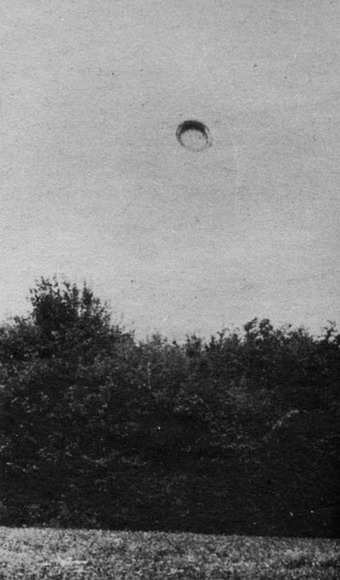
On Sunday, August 18, 1968, at approximately 1:00 p.m. local time, Emil Barnea — a 45-year-old technician — was spending the afternoon with three friends in the Baciu Forest, a wooded area located immediately west of Cluj-Napoca, Romania. The weather was exceptional: 36 degrees Celsius, perfectly clear, with no wind at all. The atmospheric stillness and high summer temperatures created conditions of near-perfect daytime visibility. Barnea had spread a blanket on the grass in a forest clearing, with his camera resting nearby.
One of his companions, Miss Matea, called out that she could see something in the sky. Barnea looked up and observed a large, round, flattened object of distinctly metallic appearance, brilliant and shining in the direct sunlight, hovering at low altitude above the treetops. The object was moving slowly in a southwesterly direction. Its size and proximity were immediately apparent: unlike distant aircraft or atmospheric phenomena observed from the ground, this object was close enough to permit detailed visual observation of its surface characteristics and structural profile.
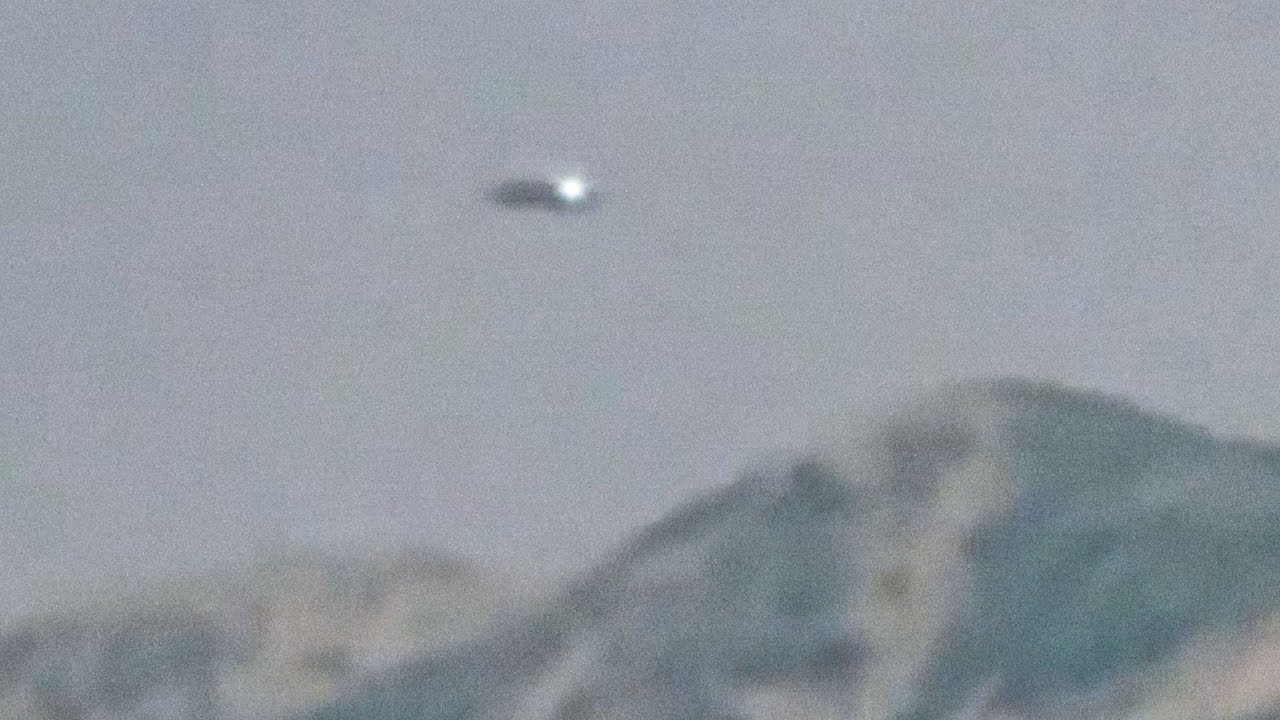
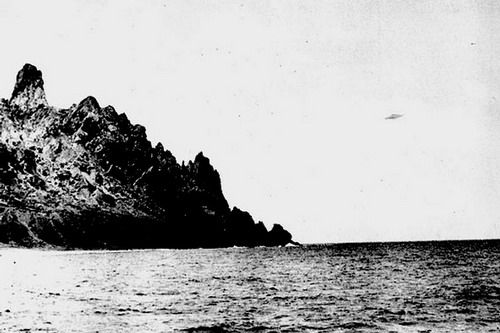
Barnea rushed to retrieve his camera from the blanket and managed to capture a first hurried photograph as the object drifted above the tree line. Because the object did not move rapidly, he had time to compose and take a second, better-framed photograph. In this image, the object appears directly overhead, its hat-brim or inverted-plate profile clearly visible against the clear blue sky, with the treeline providing natural scale reference. The object then began to change its behavior: it tilted, increased its luminosity until it appeared brighter than the direct sunlight illuminating it, and abruptly accelerated upward on a diagonal trajectory, disappearing into the high sky.
Barnea tracked it through the camera viewfinder as it departed and managed to capture two additional frames — in which the object appears progressively smaller and more distant before vanishing entirely at the horizon. The entire encounter, from the first alert to the object's final disappearance, allowed Barnea sufficient time to take four photographs. He had no prior knowledge of or interest in UFOs, and his account was given consistently and without embellishment from the time of the sighting forward.
The object began to glow intensely and tipping over, as its flight position would have been indifferent. Obviously, it looked as an inverted plate — but back then Emil Barnea knew very little about UFOs.
— Emil Barnea, witness account · ASFAN UFO RomaniaBarnea did not immediately develop the film. Like many civilian witnesses of the era, he had no reason to treat the encounter as exceptional at the time. He only sent the film for processing after completing the remaining frames on the roll. When the photographs were developed, he recognized their significance and made copies. The images were picked up by the Romanian national news agency Agerpres, checked against Barnea's account, and subsequently broadcast on national Romanian television and published in newspapers across the country. The case quickly became known internationally, appearing in specialist UFO publications and reference works worldwide.
The Baciu Forest photographs attracted serious scientific attention from the moment of their national publication. The Romanian government did not assign an official investigative body equivalent to Project Blue Book to the case, but the photographs were subjected to independent professional analysis in multiple countries — a level of cross-border forensic attention that few UFO photograph cases have received.
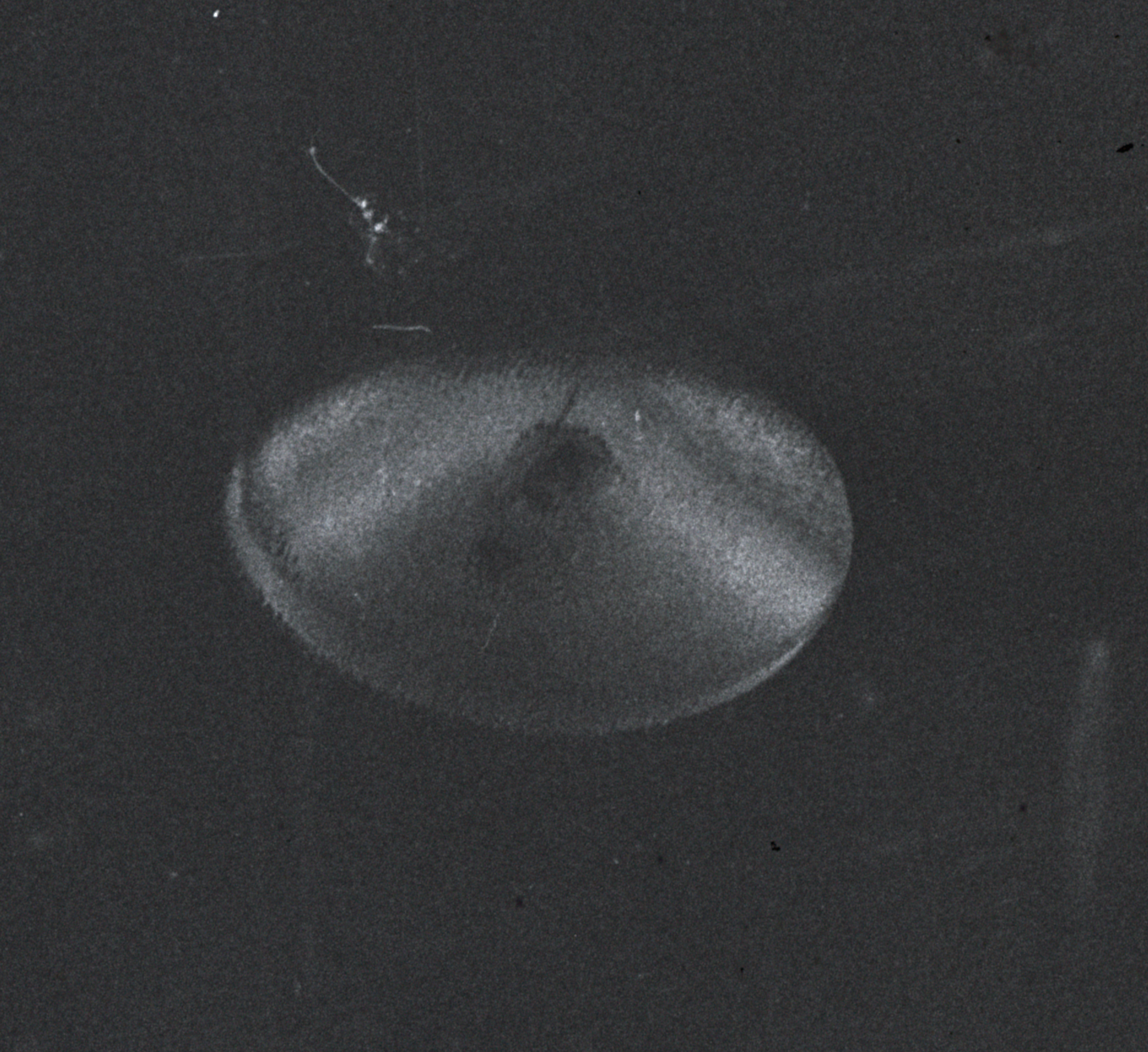
The most significant analytical finding concerns the lighting anomalies in the second photograph. In that image, the object's underside shadow placement is inconsistent with the direction of direct sunlight at that time and location. The shadow visible on the brim of the disc cannot be produced by the sun's position — it appears to be oriented in the wrong direction relative to the known solar angle. Architectural specialists at the Faculty of Architecture in Cluj-Napoca examined the image and concluded that the object must have been generating its own light — brighter than the ambient sunlight — to produce the observed shadow geometry. Barnea's own account, given independently, described the object increasing in luminosity during the sequence, consistent with this finding.
Inverted shadow geometry: In photograph No. 2, the shadow on the brim of the disc is inconsistent with the direction of natural sunlight. The Faculty of Architecture in Cluj-Napoca concluded the object's own luminous output — brighter than sunlight — produced the anomalous shadow.
Autonomous luminosity: The third photograph, when magnified, reveals a further unexplained detail: the dome of the object appears dark while the brim continues to shine. This differential illumination — where only a portion of the craft's surface is luminous — is not consistent with any known aerodynamic or propulsion phenomenon visible in 1968, and has not been explained to this day.
Self-generated light source: The combination of these two anomalies points to the object possessing an autonomous luminous capability that was independent of solar illumination. The object's brightness exceeding direct sunlight, and the selective illumination of the brim while the dome remained dark, together represent the most anomalous optical characteristics of the entire photograph sequence.
The French specialist magazine Lumieres dans la Nuit subjected the photographs to rigorous independent examination before publication. The images were submitted to the LAET laboratories in Brussels, Belgium for scientific analysis. In a statement dated March 12, 1970, analyst G. Delcorps concluded: "The absence of detectable evidence of a possible fake and conclusions of previous experts, makes me conclude that the two photos which are at me shows the major elements of authenticity."
French ufologist F. Lagarde subsequently submitted the photographs and Delcorps's bulletin to another independent scientific expert, who confirmed the same finding on October 28, 1970: "With the photos in Romania, I came to the same conclusion as Mr. Delcorps. I must also join him — and it is not for the first time — the shadows have absolutely nothing to do with sunlight."
The absence of detectable evidence of a possible fake and conclusions of previous experts, makes me conclude that the two photos which are at me shows the major elements of authenticity.
— G. Delcorps, LAET Laboratory, Brussels, Belgium · March 12, 1970The photographs were notably displayed at the First International UFO Congress held in Acapulco, Mexico in April 1977, where Colman S. VonKeviczky — then director of ICUFON — reported that the enlarged images were met with significant interest by international delegates.
The Baciu Forest encounter on August 18, 1968 was preceded, on the day before (August 17, 1968), by a separate UFO sighting by the crew of a Romanian IL-18 airliner in the same general region of Romania. This succession of two independent sightings by different witness groups — ground-based civilians and airborne military aviation personnel — in the same geographical area within 24 hours is a significant feature of the case that has received limited analytical attention in the published literature. Radar corroboration from the airliner crew's sighting, if any exists in Romanian aviation records, represents an open avenue of research.
The Baciu Forest photographs share several remarkable structural and behavioral characteristics with the Rex Heflin UFO photographs from Santa Ana, California (August 3, 1965) — a case in which a highway traffic inspector captured four Polaroid photographs of a hat-brim or disc-shaped object hovering above a road, including a fourth photograph showing a circular smoke or vapor ring left in the air at the object's point of departure.
The hat-brim / inverted-plate profile common to both cases is among the most frequently reported shapes in the global UFO photograph record — distinct from the classic saucer disc with its rounded edge, and more closely resembling an inverted dinner plate or a shallow bowl turned upside down. This specific morphology, independently reported by two unrelated civilian witnesses in different countries three years apart, represents a convergence that has not been systematically addressed in the analytical literature.
The most structurally significant shared feature is the behavioral pattern: both objects were initially observed in stable, slow drift before executing a rapid diagonal or upward acceleration at departure. In the Heflin case, this departure produced a physical exhaust trace — the circular smoke ring — visible in the fourth photograph. In the Baciu Forest case, the departure was accompanied by intense self-generated luminosity that exceeded ambient sunlight. These are consistent with a propulsion system that involves energetic emission at the object's periphery or lower surface during acceleration — a phenomenon that appears as either visible light (Baciu) or condensed vapor (Heflin) depending on atmospheric conditions.
The independence of these two cases — separated by three years, two different continents, two witnesses with no connection to each other, and independently subjected to different analytical traditions — is precisely what gives the comparison its evidential weight. Neither case's photograph sequence can be dismissed as a copy or elaboration of the other. Both were analyzed by professional scientific reviewers who reached conclusions favorable to authenticity. And both exhibit the same object profile and behavioral sequence.
The Baciu Forest photographs have been independently assessed as authentic by two European scientific laboratories using analytical standards that exceeded those typically applied to civilian UFO reports during the era. No conventional explanation — misidentified aircraft, weather balloon, atmospheric phenomenon, or fabrication — has been proposed in the peer-reviewed analytical literature that accounts for the full range of observations in the photograph sequence, including the lighting anomalies, the object morphology, and the behavioral characteristics of the flight sequence.
The lighting anomalies documented in the second and third photographs represent the most analytically significant aspect of the case. An object that generates its own luminous output — sufficient to exceed direct sunlight and to produce contradictory shadow geometry on its own structural surfaces — cannot be accounted for by any known aviation, meteorological, or atmospheric phenomenon. The specific claim that the dome appears dark while the brim continues to shine in the magnified third image is, to the author's knowledge, without parallel in the contemporaneous UFO photograph literature and has not been addressed by any published skeptical analysis of the case.
The parallel with the Rex Heflin case from Santa Ana, California (1965) adds a further dimension to the evidentiary weight of the Baciu Forest photographs. Two independent civilian witnesses, on two continents, in two different years, each produced a multi-image sequence of a hovering disc that then departed with apparent energetic emission at the object's periphery — one leaving a vapor ring, the other generating self-luminous output that exceeded sunlight. The convergence of these independent reports in their structural and behavioral characteristics constitutes a pattern that exceeds what random coincidence or common misidentification of known objects would predict.
The Baciu Forest case stands among the most rigorously authenticated photograph sequences in the global UFO record, and one of the comparatively few cases in which scientific laboratory analysis has been applied to the source material by independent professionals. The absence of any official Romanian investigation or published government determination means the case has no formal status in any national archive — yet its independent analytical pedigree may be stronger than that of many cases that received official review.
- Q.01What physical mechanism produced the differential luminosity in photograph No. 3 — the dome appearing dark while the brim continues to shine? This is the most anomalous optical characteristic documented in the photograph sequence and has not been addressed in any published analysis. A physical explanation for selective surface illumination of this type is not consistent with any known aviation or atmospheric phenomenon.
- Q.02What happened to the original film and negatives? The Baciu Forest photographs were distributed widely through Romanian national media and international specialist publications. Whether the original film, negatives, or camera are preserved in any archive, and whether they could be subjected to modern digital scanning and elemental analysis, has not been established in the available literature.
- Q.03Is there any corroborating evidence from the August 17, 1968 Romanian IL-18 airliner sighting in the same region? Two independent sightings by different witness groups within 24 hours in the same geographic region raises the possibility of a continuous or recurring aerial phenomenon. Any radar records from the airliner encounter, if preserved in Romanian aviation archives, would be significant corroborating evidence.
- Q.04What determined the specific hat-brim / inverted-plate morphology that appears in both the Baciu Forest case and the Rex Heflin case, three years and one continent apart? This convergence of object shape between two independent, non-connected civilian photograph cases represents a pattern that has not been systematically analyzed in the comparative UFO literature. Is this shape a common feature of a particular class of UAP, or does it reflect a common misidentification source that has not been identified?
- Q.05Were there other witnesses in the Baciu Forest area during the August 18, 1968 sighting who observed the object but were not interviewed or included in the published accounts? The forest clearing where Barnea and his three companions were located was a relatively accessible area. Other visitors to the forest during the same afternoon may have observed the object and could provide independent corroboration of the object's behavior and appearance.