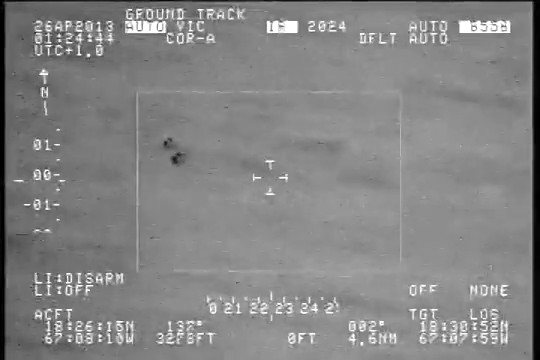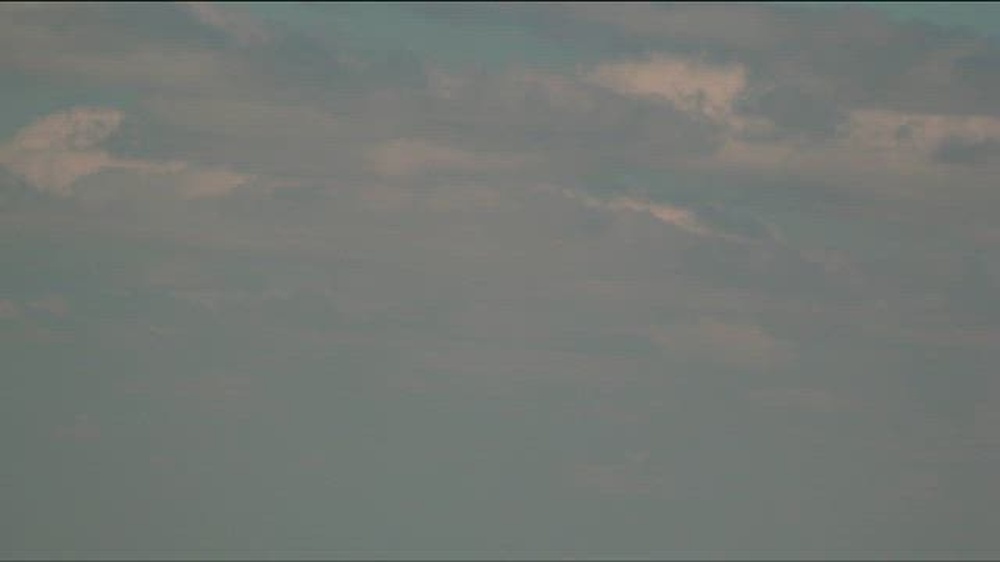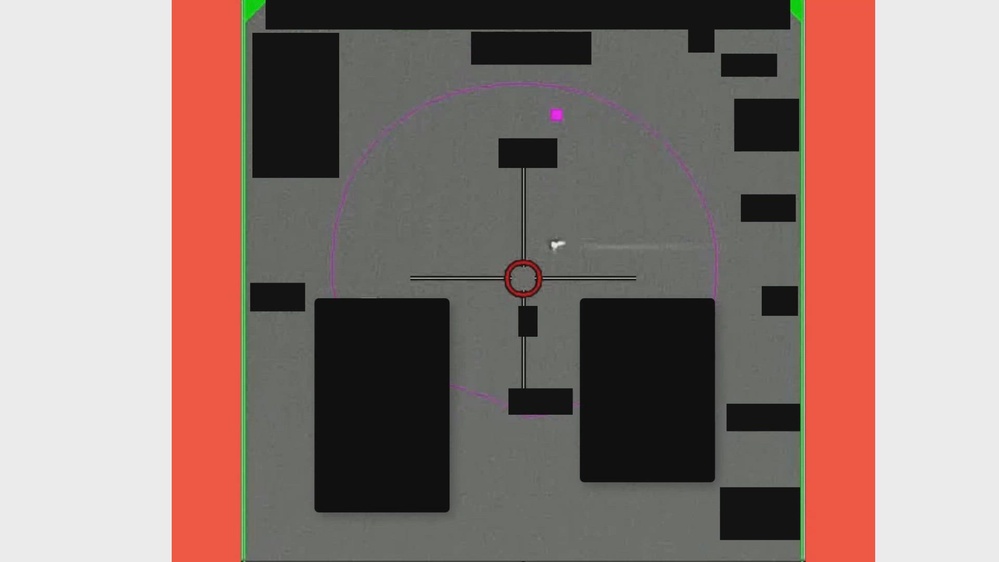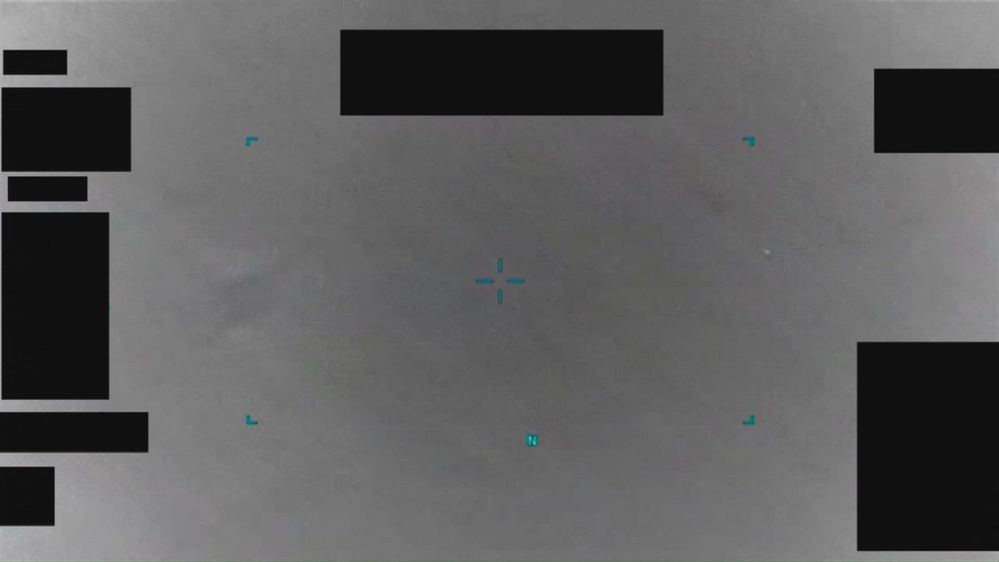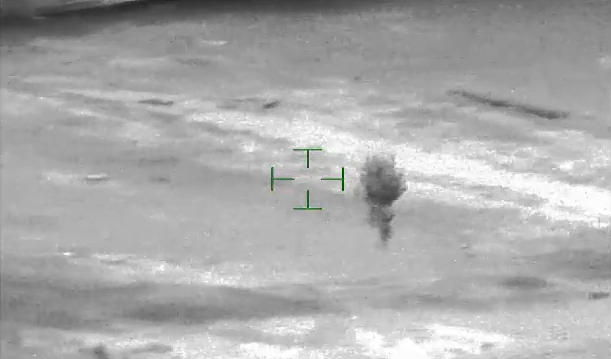
In October 2017, an infrared video sensor mounted on a U.S. military force protection aerostat operating near Al Taqaddum Air Base in Iraq recorded approximately 17 minutes of footage depicting an unidentified aerial object. Al Taqaddum, a former Iraqi Air Force base located in Anbar Province, was actively used by U.S. and coalition forces during this period for logistics and operational support missions.
The aerostat — a tethered lighter-than-air surveillance platform equipped with wide-area electro-optical and infrared sensors — was conducting routine force protection surveillance when the object appeared in its field of view. The footage, captured in the infrared spectrum, shows an object with an unusual morphology described by observers and analysts as resembling a jellyfish, featuring a central body with what appear to be trailing appendages or tendrils extending downward.
The object was observed moving through the air over an extended 17-minute period, during which several anomalous characteristics were noted. Unlike conventional balloons or debris, the object reportedly maintained a rigid, stable form throughout the recording. Witnesses and subsequent analysts noted that the tendrils did not sway or oscillate in a manner consistent with flexible materials subject to wind forces — a key point of contention with the official balloon explanation.
Perhaps most strikingly, reports associated with the incident indicate that toward the end of the surveillance period, the object appeared to rapidly accelerate upward and depart the area at a speed inconsistent with passive balloon drift. This reported upward departure distinguishes the case from many other infrared sensor captures of suspected balloon objects, which typically drift laterally with prevailing winds.
The video was later reviewed and released publicly by the All-domain Anomaly Resolution Office (AARO) as part of congressional briefings in 2023, making it one of a select set of official government UAP videos available for public and scientific scrutiny. Its release confirmed the military origin and authenticity of the footage and brought the case to wide public attention for the first time.
The Al Taqaddum Jellyfish UAP video was reviewed and investigated by the All-domain Anomaly Resolution Office (AARO), the U.S. Department of Defense office established in July 2022 to serve as the central authority for collecting, processing, and analyzing UAP reports across all operational domains including air, sea, space, and land.
AARO analysts examined the infrared footage and conducted an assessment of the object's observable characteristics. The office applied standard analytical protocols used for evaluating UAP footage, which include reviewing object morphology, apparent motion relative to the sensor platform, atmospheric conditions at the time of capture, and comparison against a database of known aerial platforms and natural phenomena.
The official assessment released by AARO concluded that the object in the video was most likely a balloon or balloon-like object. Analysts pointed to the object's apparent slow drift and its infrared signature as broadly consistent with a tethered or free-floating balloon. However, this determination has been disputed by independent researchers and some military observers who cite the object's apparent rigidity and the reported upward acceleration as inconsistent with balloon behavior.
A key limitation of the investigation was the restricted nature of the source data. While AARO had access to classified versions of the sensor data, the publicly released analysis did not include detailed measurements of the object's altitude, speed, distance from the sensor platform, or thermal profile — all data points that would be essential to definitively characterizing the object and settling the balloon debate.
AARO included this case in its growing archive of military UAP encounters. As of 2023 congressional testimony, the office was tracking hundreds of cases, many sharing common characteristics with the Al Taqaddum event — objects detected by military sensors that cannot be immediately classified as known aircraft, natural phenomena, or adversarial technology based on available data alone.
AARO's official conclusion designated the Al Taqaddum object as likely a balloon or balloon-related aerial phenomenon, though the agency acknowledged that the identification was not definitive given the available evidence. The case was not closed as fully resolved but was categorized as having a probable conventional explanation pending further analysis.
The conclusion has remained contested within the UAP research community. Critics of the balloon explanation highlight that the object's rigidity, the lack of visible swaying in the appendages during sustained movement through the air, and the reported rapid upward departure are behaviors not typically associated with free or tethered balloons under the atmospheric conditions over central Iraq.
The case underscores a recurring challenge in official UAP investigations: the gap between what sensor data can definitively prove and what the public record requires for an authoritative determination. Single-sensor infrared footage, without corresponding radar, optical, or multi-spectral data, leaves substantial ambiguity regarding an object's true physical characteristics and performance.
For AARO and congressional oversight bodies, the Al Taqaddum case represents a category of UAP encounters — visually distinctive, long-duration sensor contacts — that warrant continued investigation. It has been cited as an example of why the military's UAP reporting and sensor integration systems need further improvement to capture multi-domain data from all future encounters, rather than relying on single-sensor video footage alone.
- Q.01Why did the appendages not sway or oscillate over 17 minutes of observation? If the object were a conventional balloon or cluster of balloons, flexible appendage material would be expected to move in response to air currents during extended flight. The apparent rigidity of the trailing elements has not been explained by official analysis.
- Q.02Was the reported upward acceleration captured quantitatively in the sensor data? Witness accounts and some analyses describe the object ascending rapidly at the end of the footage, but publicly released materials do not include speed or altitude measurements that would confirm or quantify this reported behavior.
- Q.03What were the atmospheric conditions at the object's observed altitude? Without wind speed, direction, and turbulence data from the altitude at which the object was observed, it is impossible to fully evaluate whether its motion was consistent with passive balloon drift or some form of powered or buoyancy-driven flight.
- Q.04Was any radar or secondary sensor data collected during the 17-minute observation? The public record contains only the infrared sensor footage. Radar contact, if established during this extended observation window, would provide independent corroboration of the object's trajectory and speed and help rule out sensor artifacts.
- Q.05Were other sensors or personnel at Al Taqaddum able to independently observe the object? Al Taqaddum was a large, active military installation with extensive sensor infrastructure. Whether any ground-based observers or other sensor systems recorded the object during the same period remains undisclosed.
- Q.06How does this case fit within the broader pattern of structured UAP observed over active military installations in the Middle East? The Al Taqaddum object is one of several cases involving structured, multi-appendage UAP observed near U.S. military facilities in Iraq and Syria. This pattern raises national security questions about whether adversarial nations are deploying novel surveillance platforms — or whether the military is encountering a genuinely unclassified phenomenon of unknown origin that has yet to be categorized by science.