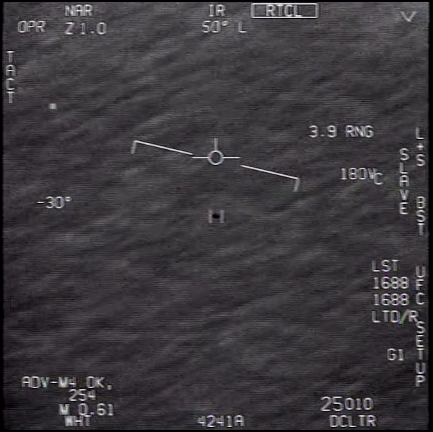
The USS Nimitz Carrier Strike Group was conducting pre-deployment training exercises approximately 100 miles southwest of San Diego in the Pacific Ocean during the week of November 10–16, 2004. The strike group included the nuclear carrier USS Nimitz, the guided-missile cruiser USS Princeton, and several surface vessels. During this period, the Princeton's advanced SPY-1 radar system had been tracking anomalous aerial contacts for several days — objects appearing at extremely high altitude and then descending rapidly to lower altitudes in ways inconsistent with any known aircraft performance envelope.
On November 14, 2004, the Princeton's radar operators vectored two F/A-18F Super Hornets from VFA-41 Black Aces to intercept one of these contacts. The lead aircraft was flown by Commander David Fravor — Commanding Officer of VFA-41 — with Weapons Systems Officer Lt. Cmdr. Jim Slaight. Upon arriving at the designated coordinates at altitude, the pilots found no object but observed a roughly 50-by-100-foot area of churning white water at the ocean surface directly below — an isolated disturbance in otherwise calm seas suggesting something was operating just below the surface.
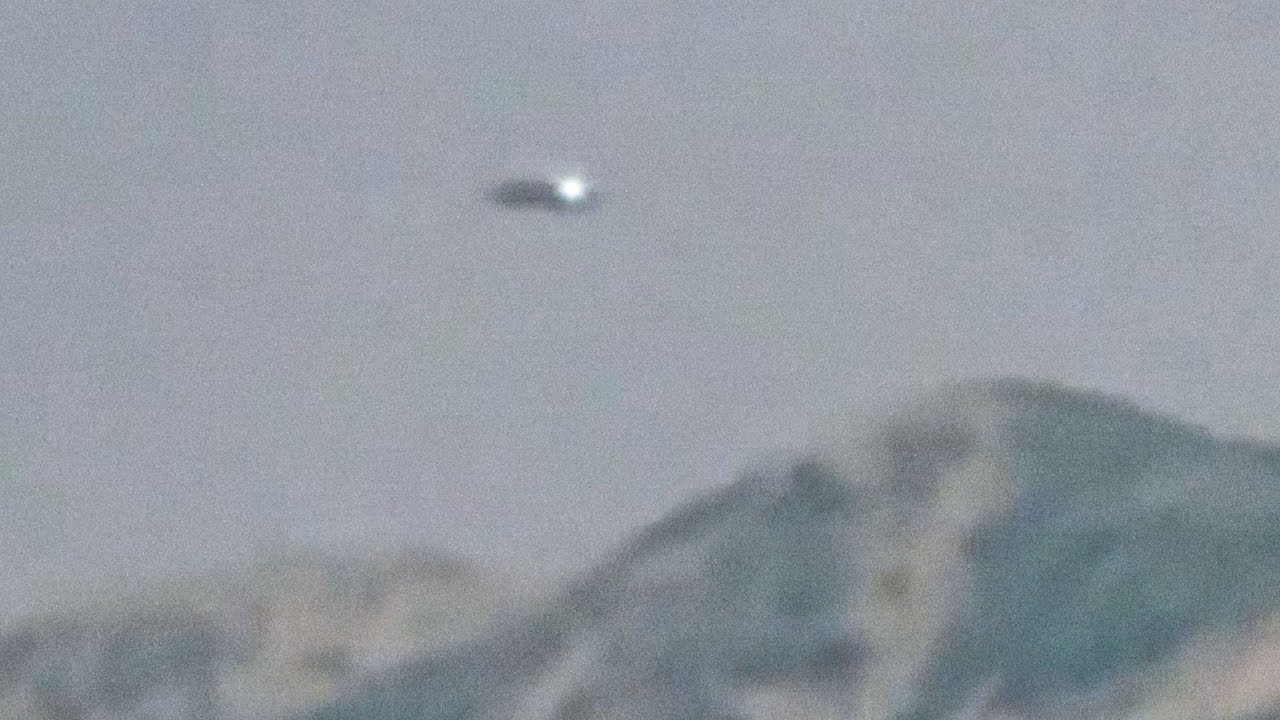
As Fravor maneuvered to investigate the water disturbance, both pilots observed a white object approximately 40 feet long hovering just above the churned water. The object had no wings, no visible exhaust, no tail, no markings, and no rotors. Its shape was described as similar to a Tic Tac candy — white, smooth, oblong, and featureless. The object moved erratically and appeared to react to Fravor's aircraft, mirroring his maneuvers. As Fravor descended in a spiral to close the distance, the object accelerated abruptly and vanished.
Within seconds of the Tic Tac's departure, the Princeton's radar operator reported that the same contact had reappeared approximately 60 miles away at the Combat Air Patrol (CAP) point being used by the Nimitz strike group — a location that had only been communicated over the strike group's secured military communications net. The near-instantaneous relocation from the intercept site to the CAP point implies velocities many times the speed of sound, beyond any known aircraft capability.
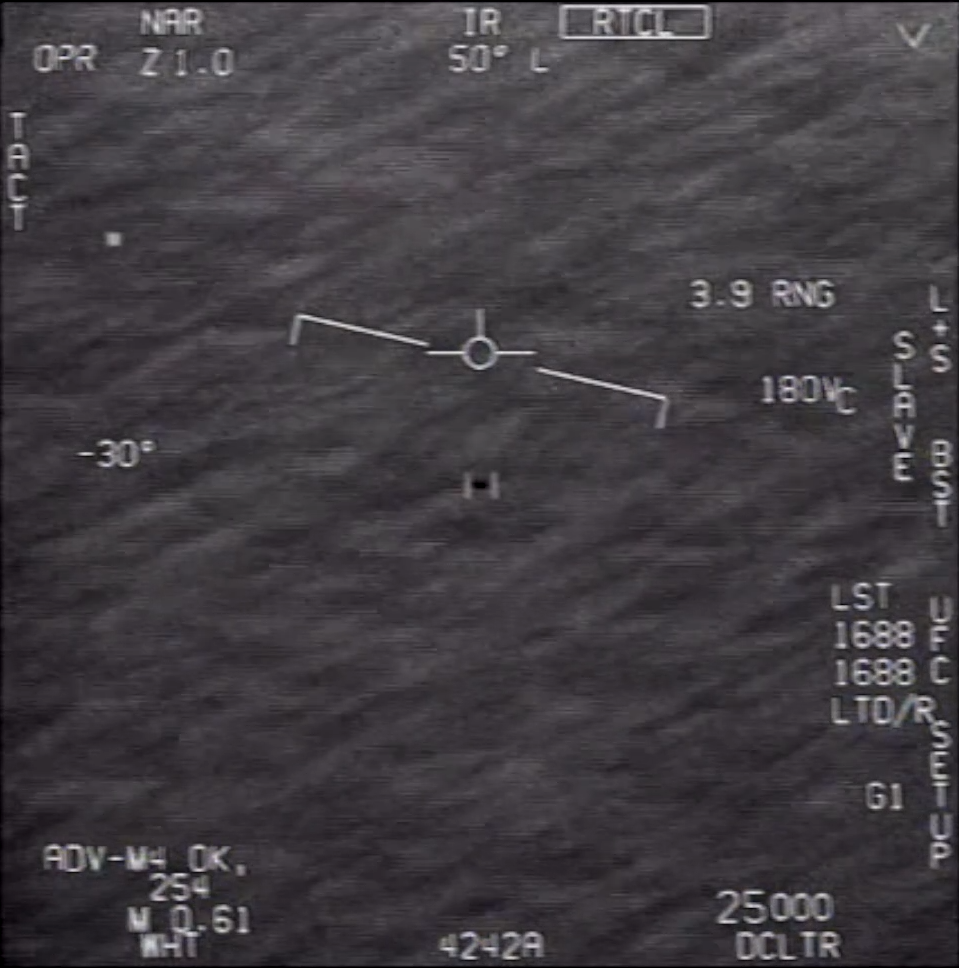
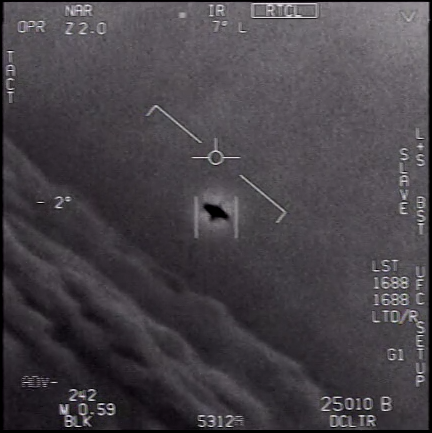
A second intercept was launched. A different F/A-18F crew captured the now-famous FLIR1 video using the aircraft's ATFLIR targeting pod. The 1 minute and 16 second clip shows the Tic Tac maneuvering in the infrared spectrum before tracking lock is lost. The video was released publicly by the New York Times in December 2017 and officially authenticated by the U.S. Navy in 2019 as genuine, unclassified footage of an unidentified aerial phenomenon.
Commander Fravor and the other witnesses were debriefed following the encounter, and data from the Princeton's radar systems and the FLIR video were submitted through intelligence channels. Multiple witnesses have stated that individuals who identified themselves as intelligence officers — not organic to the Nimitz strike group — arrived aboard ship and collected hard drives, recordings, and data files related to the encounter. The chain of custody of these original materials has never been publicly established.
The Pentagon's Advanced Aerospace Threat Identification Program (AATIP), the classified predecessor to the UAP Task Force and AARO, assessed the Nimitz case as one of the most compelling in its archive. AATIP director Luis Elizondo characterized the Tic Tac as exhibiting flight characteristics exceeding the known performance envelope of any human-made aircraft — including the absence of visible propulsion, the ability to hover, extreme acceleration, and apparent interactive response to military intercept aircraft.
The U.S. Navy formally acknowledged the Nimitz FLIR video as authentic in September 2019 and confirmed that the footage had never been cleared for public release, stating that the objects depicted are "unidentified aerial phenomena." This was the first official Navy confirmation that a specific piece of UAP video footage was genuine and depicted something the service could not identify — a statement unprecedented in the history of official U.S. military UAP disclosure.
Commander Fravor testified before Congress in July 2023 as a voluntary non-governmental witness, providing the most detailed publicly available sworn account of the encounter. He described the object's behavior under oath, stated that nothing in his extensive fighter pilot experience accounted for what he observed, and characterized the object's performance as demonstrably superior to any aircraft or weapons system he was aware of at the time of the encounter or since.
The Princeton's multi-day radar tracking data — which reportedly showed the objects descending from approximately 80,000 feet to near sea level in under a second over several days preceding the intercept — has never been publicly released. This data, if authentic and accurately characterized by witnesses, would represent the most extraordinary quantitative performance measurement in any UAP case in history, and its continued classification is one of the most significant outstanding gaps in the public record of the Nimitz encounter.
The official conclusion of the U.S. government is that the observed object remains unidentified. The Navy has confirmed the FLIR video as authentic and no conventional explanation — including balloons, atmospheric phenomena, sensor artifacts, or known aircraft — has been officially offered that accounts for the combination of corroborating radar data from the USS Princeton, visual observation by two experienced Navy pilots including a Commanding Officer, infrared video capture from a calibrated military sensor system, and the object's apparent interactive behavior.
The Nimitz case is widely assessed as the strongest single military UAP case in the modern era, distinguished by the convergence of multiple independent evidence streams. The multi-day radar tracking preceding the intercept, the corroborating observation from both F/A-18F crew members, the FLIR video, the water disturbance beneath the object, the near-instantaneous 60-mile relocation to the CAP point, and Commander Fravor's sustained congressional testimony collectively constitute an evidentiary record with few parallels in UAP history.
The case's institutional impact has been decisive. Along with the GIMBAL and GO FAST videos, the Nimitz FLIR footage was central to the political momentum that produced the Unidentified Aerial Phenomena Task Force in 2020, AARO in 2022, and the series of congressional UAP hearings beginning in 2022. Senator Marco Rubio and other lawmakers have cited the Nimitz case specifically as evidence that unexplained intrusions into restricted military airspace by objects with apparent performance superiority represent a genuine, unresolved national security concern.
Whether the Tic Tac represents an adversarial nation's classified advanced technology, an unknown natural phenomenon of extraordinary capability, or something of genuinely non-human origin remains the open question at the center of AARO's most critical investigative work. Each of these possibilities carries radically different implications for U.S. national security, and none has been ruled out by any published official investigation.
- Q.01Why has the Princeton's multi-day radar data never been publicly released? The USS Princeton's SPY-1 radar reportedly tracked objects descending from 80,000 feet to near sea level in under a second across multiple days preceding the intercept. This data would provide the most quantitative and independently verifiable UAP performance measurements in any case on record. Its continued classification prevents independent scientific evaluation of the encounter's most extraordinary claimed characteristics.
- Q.02How did the object relocate 60 miles to the CAP point within seconds of the intercept? The Princeton's radar showed the same contact reappearing at the strike group's CAP point moments after the Tic Tac departed from Fravor's intercept. Whether this was a genuine physical relocation implying extreme velocity, a different object already at the CAP point, a radar artifact, or some other explanation has never been officially analyzed in any public document.
- Q.03What happened to the data reportedly removed from the Nimitz by unidentified intelligence personnel? Multiple crew members described individuals arriving aboard the Nimitz after the encounter and collecting hard drives and recordings associated with the event. Who these individuals were, what authority they operated under, and where the collected data went has never been officially addressed or documented in the public record.
- Q.04What caused the ocean surface disturbance observed beneath the Tic Tac? Both Fravor and his WSO observed a roughly 50-by-100-foot area of churned white water in otherwise calm seas directly below where the object hovered. What physical mechanism produced this disturbance — whether propulsion wash, a submerged object, or some other cause — has never been investigated or addressed in any official account of the encounter.
- Q.05Were the multi-day radar contacts in the days before November 14 investigated at the time? The Princeton had reportedly been tracking anomalous contacts for several days before the Fravor intercept. Whether earlier intercepts were attempted, what conclusions were drawn about these preliminary contacts, and whether any documentation of the multi-day radar track survives in classified archives is not established in the public record.
- Q.06What are the national security implications if the Tic Tac represents known human technology — either American or adversarial? If the object was an adversarial nation's aircraft, it would represent a catastrophic failure of U.S. intelligence to detect the development of technology so far beyond the known state of the art. If it was a classified American program, the secrecy surrounding it and the apparent willingness to allow Navy pilots to encounter it without briefing raises serious questions about oversight and risk management. Either conclusion has profound implications that have driven — and continue to drive — the institutional UAP transparency reforms of the 2020s.